
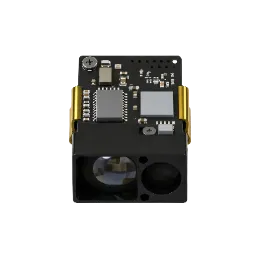
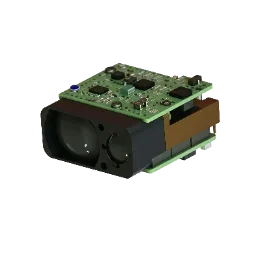
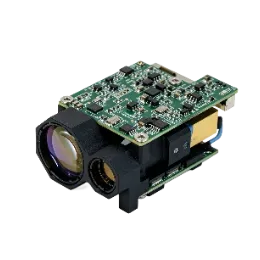


كيفية تحديد مواصفات كاميرا حرارية بعيدة المدى للرصد الاحترافي
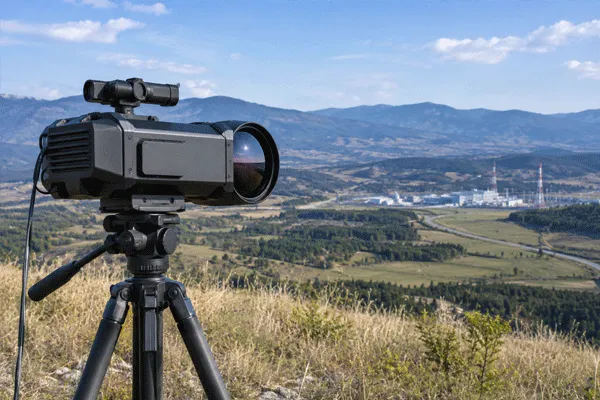
Selecting a long-range thermal camera requires more than choosing a model with a longer lens or a higher advertised observation distance. For professional observation projects, the complete configuration must match the intended observation task, target characteristics, operating environment, required field of view, and equipment integration requirements.
A thermal imaging camera designed for long-distance observation needs a coordinated optical and infrared imaging system. Detector resolution, pixel pitch, focal length, thermal sensitivity, image processing, and optical field of view all influence the final imaging performance. In some applications, laser ranging, visible-light imaging, positioning, and data communication are also required.
For equipment distributors, professional observation solution providers, and system integrators, selecting the wrong configuration may result in insufficient image detail, limited scene coverage, or unnecessary equipment costs.
كيفية تحديد مواصفات كاميرا حرارية بعيدة المدى للرصد الاحترافي
JOVSTAR develops and manufactures professional thermal imaging equipment, including thermal imaging scopes, handheld monocular cameras, multi-functional binocular systems, and other optoelectronic observation devices. Its engineering capabilities cover optical design, infrared imaging, laser ranging integration, image processing, and system-level customization.
This guide explains how to specify a long-range thermal camera according to practical project requirements, helping buyers evaluate equipment formats, optical configurations, integrated functions, and field validation procedures before making a purchasing decision.
1. What Defines a Long-Range Thermal Camera?
A long-range thermal camera is designed to provide useful thermal imaging information at distances that exceed the requirements of ordinary close-range observation.
However, long-range performance should not be defined by a single specification. It depends on how the infrared detector, optical lens, image processing system, and operating conditions work together.
A camera with a longer focal length may provide a narrower field of view, concentrating the imaging system on a smaller observation area. A detector with suitable resolution and sensitivity helps maintain useful image information under different observation conditions.
For professional buyers, the most important question is not simply how far a camera can see, but whether it can provide the required observation information at the intended distance.
Key factors affecting long-range thermal imaging
| Technical Factor | الوظيفة | Procurement Consideration |
|---|---|---|
| دقة الكاشف | Determines the number of thermal image pixels | Select according to the required image detail and scene coverage |
| مسافة البكسل | Defines the spacing between detector pixels | Consider when matching the detector with the optical system |
| البعد البؤري | Influences optical magnification and field of view | Match to the observation distance and target dimensions |
| مجال الرؤية | Determines the scene area visible through the camera | Balance distant observation with surrounding-area coverage |
| NETD | Indicates the detector’s ability to distinguish small temperature differences | Consider the thermal contrast expected in the operating environment |
| F-Number | Describes the optical aperture relative to focal length | Evaluate together with optical performance and detector requirements |
| معدل الإطارات | Determines how frequently images are updated | Consider when observing moving objects |
| Image Processing | Optimizes image presentation and visibility | Confirm supported enhancement and display functions |
These specifications should be evaluated as a complete system rather than individually.
Thermal observation distance and laser ranging distance are different
One important distinction in professional procurement is the difference between thermal imaging performance and laser ranging capability.
Thermal observation performance describes the distance at which the imaging system can provide a specified level of visual information.
Laser ranging distance describes how far the integrated or external laser rangefinder can measure distance under specified conditions.
These two values are not interchangeable.
For example, JOVSTAR’s JV-MFB675 binocular system offers laser ranging configurations of 6 km, 8 km, and 12 km. These are laser measurement specifications, not equivalent thermal detection, recognition, or identification distances.
Buyers should therefore evaluate thermal imaging performance and ranging capability separately.
For a more detailed explanation of detection, recognition, and identification distances, refer to our existing guide: مدى الكاميرا الحرارية: الفرق بين الكشف والتعرّف.
2. Observation Tasks and Target Requirements
Before selecting a long-range thermal imaging camera, buyers should define the observation task.
Different projects may require different levels of image detail, scene coverage, and operational flexibility. A configuration suitable for monitoring a large outdoor area may not be ideal for observing smaller objects at a specific distance.
Understanding the intended task helps determine which optical and detector configurations are appropriate.
Define the observation requirements
1. Observation distance
Identify the expected operating distance and the maximum distance at which useful observation information is required.
Avoid selecting equipment based only on its maximum advertised range. The practical requirement should reflect the distance at which the camera needs to perform the intended task.
2. Object size and characteristics
The physical size of an object influences how much image information the thermal camera can collect at a given distance.
Larger objects generally occupy more pixels than smaller objects under the same optical configuration.
Buyers should provide the approximate dimensions and characteristics of the objects they need to observe.
3. Required observation task
Clarify whether the project requires:
- General heat-signature detection.
- Object or category recognition.
- More detailed visual identification.
- Continuous observation of moving objects.
- Thermal and visible-light image comparison.
- Distance measurement and positioning information.
Each task may require a different level of imaging performance.
4. Scene coverage
Some applications require a narrow field of view to concentrate on a specific distant observation area.
Others require broader scene coverage to monitor a larger area without frequent repositioning.
5. Operating environment
Consider the expected temperature, humidity, visibility, rainfall, vibration, and other environmental conditions.
These factors should be included in the equipment selection and field validation process.
Project requirement checklist
| Requirement | Information Buyers Should Prepare |
|---|---|
| Application | Professional observation, perimeter monitoring, coastal monitoring, or infrastructure inspection |
| Observation Distance | Normal operating distance and maximum required distance |
| Object Characteristics | Approximate dimensions and thermal characteristics |
| Observation Task | Detection, recognition, identification, or continuous observation |
| Scene Coverage | Required horizontal and vertical field of view |
| Operating Environment | Temperature, humidity, visibility, and weather conditions |
| Equipment Format | Handheld monocular, thermal scope, or binocular system |
| Additional Functions | Laser ranging, visible-light imaging, GPS/GNSS, and data storage |
| Integration | Power, communication, mounting, and external display requirements |
Providing this information before requesting a quotation allows the manufacturer to recommend a more suitable configuration.
3. Selecting the Appropriate Thermal Imaging Format
Long-range thermal imaging equipment is available in different physical formats and system configurations.
The appropriate choice depends on portability, observation duration, required functions, and whether the equipment will operate independently or as part of a larger system.
For professional buyers, three common considerations are handheld thermal imaging cameras, thermal imaging scopes, and multi-functional binocular systems.
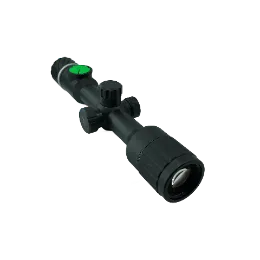
Thermal imaging scopes
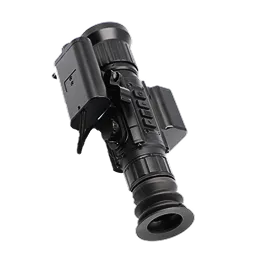
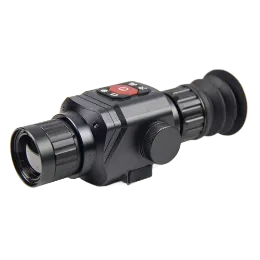
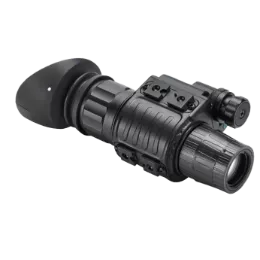
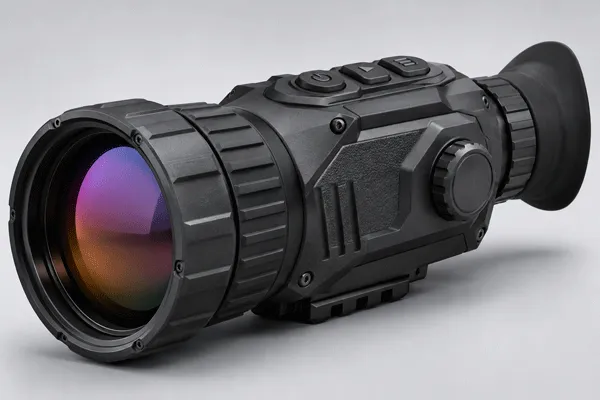
Thermal imaging scopes combine an infrared detector, optical lens, image processing system, and viewing display in a compact device.
Their integrated structure makes them suitable for portable observation applications where users need a dedicated thermal imaging instrument.
Important selection factors include:
- Detector resolution and sensitivity.
- Lens focal length and field of view.
- Digital zoom functions.
- Display resolution.
- Battery operating time.
- Environmental protection and mechanical durability.
For projects requiring a relatively narrow field of view and longer-distance observation, a 75mm optical configuration may be worth evaluating.
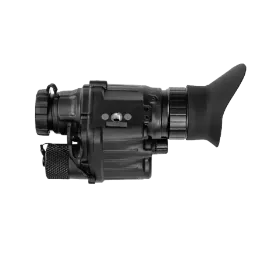
Handheld thermal imaging monoculars
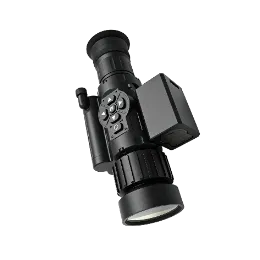
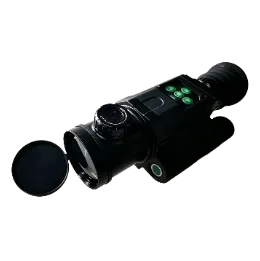
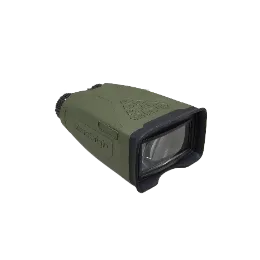
Handheld monocular cameras are designed for portable observation and flexible field operation.
They are useful when operators need to carry the equipment between locations or perform observation without installing a permanent system.
Compared with more complex multi-sensor equipment, a handheld monocular may offer a simpler operating structure and a more compact configuration.
Buyers should consider the balance between weight, battery life, optical performance, and required additional functions.
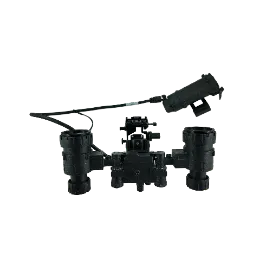
Multi-functional binocular systems
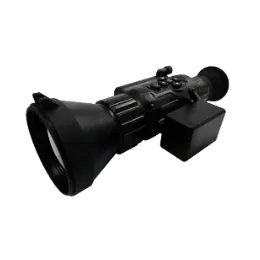
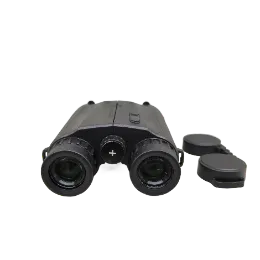
Multi-functional binocular systems combine thermal imaging with additional optical and electronic functions.
Depending on the model, these systems may integrate:
- Infrared thermal imaging.
- Visible-light imaging.
- Laser ranging.
- GPS/GNSS positioning.
- Digital magnetic compass.
- Image and video storage.
Such configurations are suitable for projects that require multiple information sources within one portable observation device.
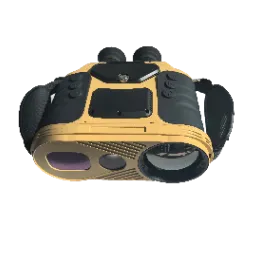
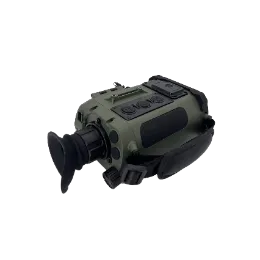
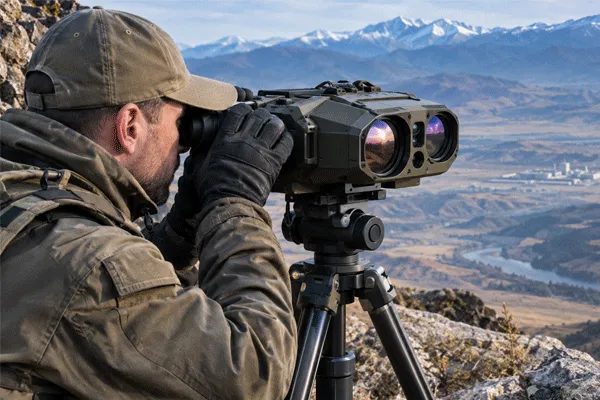
For example, JOVSTAR’s JV-MFB675 series combines a 640×512 thermal imaging detector, a 75mm infrared lens, a visible-light camera, and integrated laser ranging and positioning functions.
The different configurations provide ranging options of 6 km, 8 km, or 12 km.
Explore the JOVSTAR Multi-functional Binocular Camera for further product information.
كيفية تحديد مواصفات كاميرا حرارية بعيدة المدى للرصد الاحترافي
Comparing the three equipment formats
| Evaluation Factor | منظار تصوير حراري | Handheld Monocular | Multi-functional Binocular |
|---|---|---|---|
| Main Design | Integrated thermal observation device | Compact portable thermal camera | Integrated multi-sensor observation system |
| Portability | Model-dependent | Generally compact | Model-dependent |
| Thermal Imaging | نعم | نعم | نعم |
| Visible-Light Imaging | Model-dependent | Model-dependent | Available on selected integrated models |
| قياس المدى بالليزر | Available on selected models | Model-dependent | Integrated on JV-MFB675 |
| تحديد المواقع | Model-dependent | Model-dependent | GPS/GNSS available on JV-MFB675 |
| Main Selection Priority | Optical configuration | Portability and operation | Multi-function integration |
The best format should be selected according to the actual project requirements rather than assuming that a more complex system is always better.
4. Optical Configuration for Long-Distance Observation
Optical configuration is one of the most important aspects of long-range thermal camera selection.
A suitable optical system must match the detector and provide the required field of view, image presentation, and observation performance.
For buyers comparing different thermal imaging cameras, focal length and field of view should be evaluated together.
Focal length selection
Focal length influences the angle of view and the amount of detail that can be presented within a particular scene.
Generally:
- Shorter focal lengths provide wider observation coverage.
- Medium focal lengths balance scene coverage and distant observation.
- Longer focal lengths provide narrower observation angles and concentrate on smaller scene areas.
For example, JOVSTAR’s current thermal imaging product range includes 35mm, 50mm, and 75mm optical configurations.
The 75mm configuration is designed for more focused long-distance observation, while shorter focal lengths provide broader scene coverage.
مجال الرؤية
Field of view describes the horizontal and vertical angles covered by the optical system.
A narrow field of view can be useful when concentrating on a specific distant observation area.
However, it also means that a smaller surrounding area is visible at one time.
A wider field of view provides more environmental information but may not offer the same level of concentration on distant objects.
Buyers should consider whether the project prioritizes:
- Long-distance observation of a defined area.
- Wider-area environmental monitoring.
- Flexible observation across different distances.
- A balance between scene coverage and image detail.
Detector and lens matching
The detector and optical lens must be selected as a coordinated combination.
Important parameters include:
- Detector resolution.
- Pixel pitch.
- البعد البؤري.
- Optical aperture.
- Field of view.
- Thermal sensitivity.
A longer lens does not automatically guarantee suitable imaging performance. Its compatibility with the detector and the complete optical design must also be evaluated.
JOVSTAR’s optical engineering capabilities cover focal length configuration, field-of-view optimization, optical transmittance, and distortion control.
Example: JOVSTAR 75mm thermal imaging configuration
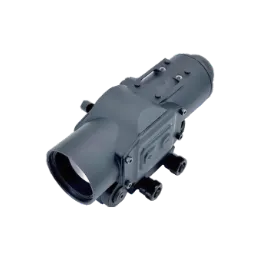
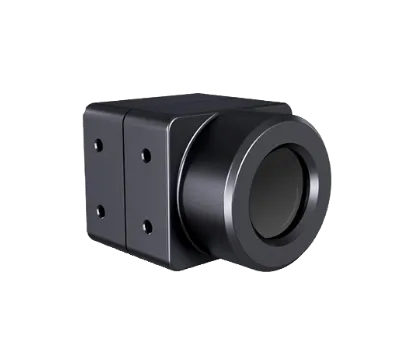
The JV-TSR675 75mm Monocular Thermal Imaging Scope provides a practical example of a long-range optical configuration.
| المعلمات | Specification |
|---|---|
| الطراز | JV-TSR675 |
| دقة الكاشف | 640×512 |
| نوع الكاشف | Uncooled Infrared Sensor |
| النطاق الطيفي | 8–14 μm |
| NETD | ≤30 ملي كلفن |
| البعد البؤري | 75 mm |
| مجال الرؤية | 5.9° × 4.7° |
| معدل الإطارات | 50 Hz |
| التقريب الرقمي | 2X / 4X / 8X |
| Recognition Distance | Up to 2.8 km for animals |
| Laser Rangefinder | 1 km |
These are model-specific specifications. The stated recognition distance applies to the manufacturer’s specified animal observation conditions and should not be treated as a universal performance figure for every object or environment.
For additional details, visit the 75mm Monocular Thermal Imaging Scope product page.
5. Handheld Monocular vs. Binocular Systems
Both monocular and binocular thermal imaging devices can support professional long-range observation, but they offer different equipment configurations and operational functions.
The decision should consider not only how the equipment is viewed but also whether the project requires additional sensors and integrated data.
When is a monocular system suitable?
A monocular system may be appropriate when buyers prioritize:
- Compact equipment dimensions.
- Portable field operation.
- Dedicated infrared observation.
- A relatively simple operating interface.
- Lower system complexity.
For example, the JOVSTAR JV-TSR675 uses a 640×512 infrared detector and a 75mm lens.
It also supports digital zoom and an integrated 1km laser rangefinder.
This configuration is worth considering when a project requires portable thermal observation with a relatively focused optical system.
When is a binocular system more suitable?
A multi-functional binocular system may be preferable when the project requires several observation and measurement functions in one device.
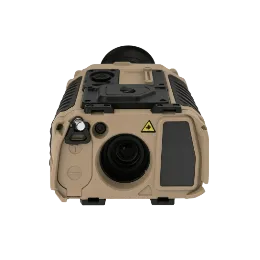
The JOVSTAR JV-MFB675 series integrates thermal imaging, visible-light imaging, laser ranging, and positioning functions.
Its principal specifications include:
| المعلمات | JV-MFB675 Series |
|---|---|
| Thermal Detector | VOx FPA |
| دقة التصوير الحراري | 640×512 |
| مسافة البكسل | 12 μm |
| معدل الإطارات | 50 Hz |
| NETD | ≤40 mK @ 25°C, F#1.0 |
| Infrared Lens | 75 مم F1.0 |
| Thermal Field of View | 5.9° × 4.7° |
| Visible-Light Camera | 2688×1520 |
| الطول الموجي لليزر | 1.54 μm |
| Laser Ranging Options | 6 km / 8 km / 12 km |
| تحديد المواقع | GPS/GNSS |
| Digital Compass | Integrated DMC |
The system provides thermal and visible-light observation alongside distance measurement and positioning information.
The available laser ranging configurations should be evaluated separately from thermal imaging observation performance.
For buyers who need a portable multi-sensor system, the كاميرا منظار متعددة الوظائف offers a product configuration worth considering.
6. Laser Rangefinder Integration
Laser rangefinder integration can provide additional measurement information for long-range thermal observation projects.
A thermal camera presents infrared imaging information, while a laser rangefinder measures the distance between the equipment and an object under specified conditions.
When these functions are integrated into one system, users can access thermal images and measured distance information through a coordinated device.
Why integrate a laser rangefinder?
Depending on the project, laser ranging may support:
- Direct distance measurement.
- Observation data supplementation.
- Positioning calculations.
- Distance information display.
- Integration with external equipment.
- Multi-sensor information coordination.
For professional buyers, the value of laser ranging depends on whether distance information is actually required by the application.
A thermal imaging camera without integrated ranging may be sufficient for some observation tasks.
Other projects may require a combined thermal imaging and ranging configuration.
Key laser rangefinder specifications
| المعلمات | What Buyers Should Confirm |
|---|---|
| الطول الموجي لليزر | Confirm the available wavelength and system configuration |
| فئة السلامة للعين | Verify the applicable laser safety classification |
| الحد الأقصى لمسافة القياس | Confirm performance for the specified target conditions |
| الحد الأدنى لمسافة القياس | Check the minimum supported measurement distance |
| Measurement Accuracy | Review the specified ranging accuracy |
| تردد القياس | Confirm single-shot or continuous measurement requirements |
| واجهة الاتصال | Check compatibility with the thermal imaging system |
| تكامل البيانات | Confirm display, recording, and external data transmission requirements |
Integrated vs. independent laser ranging
An integrated laser rangefinder is incorporated into the thermal imaging equipment and can provide a more coordinated operating experience.
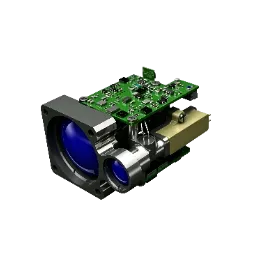
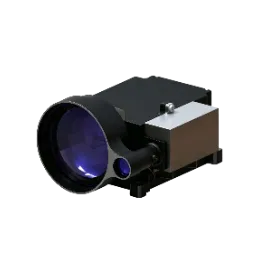
An independent laser rangefinder module may be more suitable when the customer is developing a customized observation system or integrating several optical components.
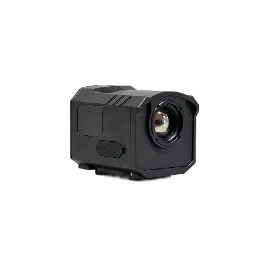
JOVSTAR offers both integrated multi-functional observation equipment and independent laser rangefinder products.
Its laser ranging technology supports integration with thermal imaging, visible-light, and night vision systems.
Explore the JOVSTAR Laser Rangefinders product range to review available ranging configurations and integration options.
When evaluating a system, buyers should always distinguish the laser’s maximum measurement distance from the thermal camera’s detection and recognition performance.
7. Environmental and Field Testing
A long-range thermal camera may be used in open fields, coastal environments, remote infrastructure sites, and other outdoor locations.
In these applications, environmental conditions can influence equipment reliability and practical observation performance.
A product specification should therefore include more than detector and optical parameters.
Environmental requirements
1. Operating temperature
Confirm the required temperature range according to the project’s geographical location and operating schedule.
2. Humidity and moisture protection
For outdoor equipment, review enclosure protection and the relevant environmental testing requirements.
3. Dust and water protection
Where equipment may be exposed to dust, rain, or water splashes, confirm the applicable IP rating and supporting documentation.
4. Mechanical stability
Equipment used in mobile or frequently transported applications may require additional attention to vibration resistance and mechanical durability.
5. Battery and operating time
For portable equipment, battery capacity and continuous operating time are important procurement considerations.
6. Visibility and atmospheric conditions
Field testing should include the environmental conditions expected during actual operation.
Rain, fog, humidity, and reduced thermal contrast may affect observation performance. Testing in only ideal weather conditions may not provide sufficient information about real-world suitability.
Recommended field validation procedure
Before approving a long-range thermal camera for a project, buyers should establish a structured field evaluation.
| Test Stage | Evaluation Content |
|---|---|
| Configuration Confirmation | Verify the detector, lens, software, and accessories |
| Initial Functional Test | Check startup, display, controls, and power supply |
| Optical Verification | Confirm the field of view and focusing functions |
| Observation Test | Evaluate imaging performance at agreed distances |
| Laser Ranging Test | Verify ranging performance independently |
| Environmental Evaluation | Test under relevant operating conditions |
| Data Recording | Record observations, measurements, and test conditions |
| Final Assessment | Compare results with the agreed acceptance criteria |
The test record should identify the product model, configuration, target characteristics, observation distance, environmental conditions, and evaluation results.
This makes it easier to compare different product configurations and determine whether the selected equipment meets the project’s requirements.
JOVSTAR’s engineering and testing capabilities include optical evaluation, infrared imaging development, ranging integration, and environmental reliability testing.
For project-specific requirements, buyers can discuss the proposed test plan with the manufacturer’s technical team.
8. Matching Thermal Camera Configurations to Projects
Different long-range observation projects require different combinations of optical performance, equipment format, and additional functions.
Instead of selecting a product according to one specification, buyers should compare the complete system configuration against the intended application.
The following examples illustrate how different requirements may influence product selection.
Project Type 1: Portable Long-Distance Thermal Observation
Main requirements:
- Portable equipment.
- Focused observation at longer distances.
- Suitable thermal detector configuration.
- Dedicated infrared optical system.
- Simple field operation.
Recommended configuration direction:
A handheld monocular or thermal imaging scope with a relatively long focal length may be suitable.
A 75mm optical configuration is worth evaluating when a narrower field of view and more focused observation are required.
The JOVSTAR JV-TSR675 is one example of this equipment format.
Project Type 2: Multi-Sensor Observation and Distance Measurement
Main requirements:
- Thermal and visible-light observation.
- Integrated laser ranging.
- Positioning information.
- Portable multi-functional equipment.
- Image and video storage.
Recommended configuration direction:
A multi-functional binocular system combining thermal imaging, visible-light imaging, laser ranging, and positioning functions may be more appropriate.
The JOVSTAR JV-MFB675 series provides 6km, 8km, and 12km laser ranging configurations.
The actual ranging option should be selected according to the required measurement distance and target conditions.
كيفية تحديد مواصفات كاميرا حرارية بعيدة المدى للرصد الاحترافي
Project Type 3: Integrated Professional Observation Systems
Main requirements:
- Thermal imaging integration.
- External communication interfaces.
- Additional optical or ranging components.
- Customized mechanical structure.
- Project-specific data integration.
Recommended configuration direction:
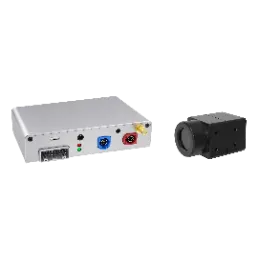
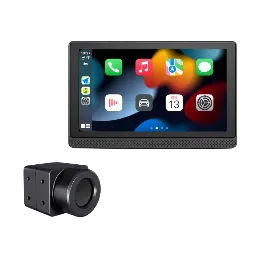
A project-level thermal imaging system should be evaluated according to its complete hardware and software architecture.
This may involve detector selection, optical design, external interfaces, laser ranging integration, positioning functions, and customized software.
JOVSTAR’s engineering capabilities support optical design, circuit engineering, image processing, ranging algorithms, and system integration.
For customized projects, buyers can discuss the technical requirements with the engineering team before finalizing the product configuration.
A practical long-range thermal camera selection checklist
Before requesting a quotation, confirm the following information:
| Selection Item | Confirmation Required |
|---|---|
| Application | What is the intended observation task? |
| Observation Distance | What is the required operating distance? |
| Target Characteristics | What are the target dimensions and thermal conditions? |
| الكاشف | What resolution and sensitivity are required? |
| Lens | Which focal length and field of view are appropriate? |
| Equipment Format | Monocular, thermal scope, or multi-functional binocular? |
| قياس المدى بالليزر | Is integrated distance measurement necessary? |
| تحديد المواقع | Are GPS/GNSS and compass functions required? |
| الشاشة | What display and image presentation functions are needed? |
| Environmental Conditions | What temperature and protection requirements apply? |
| Integration | Are external interfaces or customized structures required? |
| Validation | What are the project acceptance criteria? |
A complete specification makes it easier for the manufacturer to recommend an appropriate configuration and prepare a technically relevant quotation.
Conclusion: Specify the Complete System, Not Just the Observation Distance
Selecting a long-range thermal camera requires a systematic evaluation of the complete imaging and equipment configuration.
Detector performance, optical focal length, field of view, equipment format, laser ranging, environmental protection, and system integration all contribute to the final solution.
For professional observation equipment buyers, the most effective approach is to define the actual observation task first and then select the detector, optical module, and additional functions according to the project’s requirements.
JOVSTAR provides professional thermal imaging equipment, including 75mm thermal imaging scopes, handheld monocular cameras, multi-functional binocular systems, and integrated optoelectronic solutions.
Supported by optical design, infrared imaging, image processing, laser ranging integration, and system engineering capabilities, JOVSTAR works with international buyers to evaluate application requirements and recommend suitable thermal imaging configurations.
Discuss Your Long-Range Thermal Imaging Configuration
Share your intended application, required observation distance, target characteristics, preferred equipment format, and additional technical requirements.
JOVSTAR’s team can review your project information and discuss a suitable thermal imaging configuration for your professional observation needs.
Explore JOVSTAR Thermal Imaging Cameras
Contact JOVSTAR for Technical Consultation
FAQ
What makes a thermal imaging camera suitable for long-range observation?
Long-range thermal imaging depends on the coordinated performance of the infrared detector, optical lens, image processing system, and operating conditions. Important specifications include detector resolution, pixel pitch, focal length, field of view, and NETD. The appropriate combination depends on the intended observation task and target characteristics.
Is a 75mm thermal imaging lens suitable for long-distance observation?
A 75mm lens provides a relatively narrow field of view and can be suitable for more focused observation at longer distances. However, its suitability depends on detector configuration, target size, required scene coverage, and actual operating conditions. Buyers should evaluate the complete imaging system rather than focal length alone.
What is the difference between a thermal imaging range and a laser ranging distance?
Thermal imaging range refers to the distance at which a thermal camera can perform a specified observation task. Laser ranging distance refers to the distance that a laser rangefinder can measure under specified conditions. These are separate technical indicators and should not be used interchangeably when comparing equipment.
Should I choose a monocular or binocular thermal imaging camera?
A monocular may be preferable when portability and dedicated thermal observation are the main priorities. A multi-functional binocular system may be more suitable when thermal imaging needs to be combined with visible-light imaging, laser ranging, positioning, and data storage. The choice depends on the required functions and equipment format.
Does higher detector resolution always provide longer observation distance?
Not necessarily. Observation performance depends on the complete optical and detector configuration, including pixel pitch, focal length, target dimensions, and environmental conditions. Buyers should evaluate resolution together with field of view and the required observation task.
Can a long-range thermal imaging camera integrate a laser rangefinder?
Yes. Selected JOVSTAR thermal imaging systems integrate laser ranging functions. The JV-MFB675 series, for example, combines thermal imaging, visible-light imaging, laser ranging, and positioning functions. Independent laser rangefinder modules are also available for customized system integration.
What information should I provide when requesting a long-range thermal camera quotation?
Provide the intended application, observation distance, target dimensions, required observation task, detector preferences, optical configuration, field of view, operating environment, and additional functions such as laser ranging or positioning. If the equipment needs to integrate with another system, include relevant interface and mechanical requirements.
هل تحتاج إلى مساعدة في اختيار المنتج المناسب؟
أخبرنا عن طبيعة تطبيقك والهدف وظروف التشغيل. وسيقوم فريق هندسة JOVSTAR بالتوصية بالتهيئة المناسبة وإعداد عرض أسعار لك.
طلب عرض سعر