


OEM Thermal Camera Customization: From Technical Requirements to Production
For OEM brands, equipment manufacturers, and system integrators, finding an OEM thermal camera manufacturer is about more than selecting an existing product and adding a company logo. Different projects may require specific infrared detector configurations, optical modules, hardware interfaces, imaging functions, mechanical structures, or software integration capabilities.
A standard thermal imaging camera may meet basic observation requirements, but it may not always fit the buyer’s product design, operating environment, branding strategy, or existing equipment platform. In these situations, OEM and ODM cooperation provides a more flexible way to develop thermal imaging equipment around clearly defined technical and commercial requirements.
OEM Thermal Camera Customization: From Technical Requirements to Production
However, successful customization requires more than describing a desired product. Buyers and manufacturers need to translate application requirements into measurable technical specifications, confirm component compatibility, develop and validate prototypes, and establish consistent production standards.
As an optoelectronic equipment manufacturer and solution provider, JOVSTAR supports OEM manufacturing and ODM development for thermal imaging systems and other professional optoelectronic equipment. Its engineering capabilities cover optical modules, infrared imaging, hardware and interfaces, image processing, algorithms, and system integration.
This guide explains how to plan an OEM thermal camera project, what technical information buyers should prepare, which components may be customized, and how to move from initial requirements to prototype validation and mass production.
1. When Do Buyers Need OEM Thermal Cameras?
OEM customization becomes valuable when standard thermal imaging products cannot fully satisfy a buyer’s technical, branding, or integration requirements.
For distributors, OEM cooperation may provide a consistent product identity and configuration for their target markets. For equipment manufacturers, customized thermal imaging modules can help integrate infrared observation into existing products. System integrators may require specific hardware interfaces, optical configurations, or software functions to connect thermal imaging equipment with larger systems.
Understanding when customization is necessary helps buyers avoid unnecessary engineering costs while ensuring that important project requirements are addressed.
Common situations that require OEM customization
1. Private-label product development
International distributors and established brands may want to sell thermal imaging equipment under their own brand names.
Typical requirements include:
- Approved brand logos and product identification.
- Customized product appearance and labeling.
- Packaging and documentation requirements.
- Consistent product configurations across orders.
- Defined quality and delivery requirements.
The manufacturer produces equipment according to the confirmed configuration, branding, and delivery requirements.
2. Application-specific optical configurations
Different observation tasks require different optical configurations.
For example, buyers may need a particular focal length, field of view, optical transmission, or distortion correction arrangement.
A standard lens configuration may not provide the desired balance between observation distance and scene coverage.
3. Integration with existing equipment
Equipment manufacturers and system integrators may need thermal imaging components to work with their existing electronic or optoelectronic platforms.
This may involve customized enclosures, power supplies, mounting structures, video outputs, communication interfaces, or wireless transmission options.
4. Specialized imaging and software functions
Some projects require specific image presentation, data recording, display interfaces, or integration functions.
These requirements may involve image enhancement, color restoration, custom on-screen displays, or communication protocols.
5. Project-specific environmental requirements
Equipment intended for outdoor or specialized industrial environments may require particular enclosure designs and environmental protection configurations.
The required operating conditions and protection levels should be defined before engineering development begins.
OEM vs. ODM: Which cooperation model should buyers choose?
OEM and ODM serve different development requirements.
| Evaluation Factor | OEM Manufacturing | ODM Development |
|---|---|---|
| Main approach | Manufacturing according to confirmed product configurations | Product and system development based on the manufacturer’s engineering platform |
| Product design | Follows an agreed design or configuration | Involves broader engineering development |
| Branding | Can support approved private-label requirements | Can support customized product branding |
| Technical involvement | Focuses on production and agreed modifications | Includes engineering design and development |
| Typical buyers | Distributors, established brands, equipment companies | Brands and integrators with specific product development requirements |
| Main objective | Consistent production of a confirmed product | Developing equipment for particular applications and integration needs |
JOVSTAR provides both OEM manufacturing and ODM development for night vision devices, thermal imaging systems, and advanced optoelectronic equipment.
The appropriate cooperation model depends on how much of the product configuration is already established and how much additional engineering development is required.
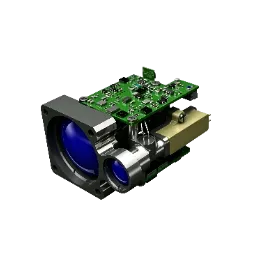
2. Detector and Optical Module Customization
The infrared detector and optical module are two important elements of a thermal imaging camera.
Their configuration influences how the equipment captures and presents thermal information. Therefore, buyers should evaluate these components together rather than selecting a detector or lens independently.
Infrared detector configuration
The detector is responsible for capturing infrared radiation and converting it into electrical signals for image processing.
When discussing a custom thermal imaging camera, buyers should identify the imaging requirements that the detector configuration needs to support.
Important considerations include:
- Detector type: Confirm the appropriate infrared detector technology for the intended product.
- Resolution: Define the required image resolution according to the observation task.
- Pixel pitch: Consider the detector pixel configuration when evaluating optical matching.
- Thermal sensitivity: Establish the required imaging sensitivity under the intended operating conditions.
- Frame rate: Confirm the required image update rate.
- Operating environment: Consider the expected temperature and environmental conditions.
A higher detector resolution does not automatically guarantee that every application will achieve better practical results.
Detector selection should be coordinated with lens configuration, target characteristics, observation distance, and the overall system design.
For example, a compact handheld thermal imaging camera and a long-range thermal observation system may require different detector and optical combinations.
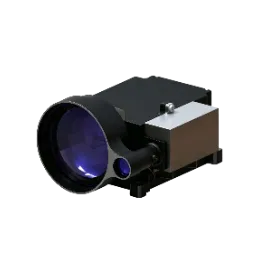
Optical module customization
The optical module determines how infrared information is collected and delivered to the detector.
According to the application, customization may involve:
| Optical Parameter | Customization Consideration |
|---|---|
| Focal Length | Matches the required observation distance and target size |
| Field of View | Determines the width of the observed scene |
| Optical Transmittance | Affects the amount of infrared radiation transmitted through the optical system |
| Distortion Correction | Helps control optical image distortion |
| Lens Configuration | Matches the optical design to the selected detector and equipment format |
For OEM buyers, the key is to communicate the actual observation task rather than simply requesting a longer lens or higher-resolution detector.
The manufacturer can then evaluate the optical and detector configuration together.
How JOVSTAR supports detector and optical customization
JOVSTAR’s OEM/ODM service identifies infrared detector configuration and imaging performance as customization areas.
Its optical engineering capabilities include focal length, field of view, optical transmittance, and distortion optimization.
These engineering resources help coordinate the optical module and infrared imaging system according to the intended application and operating environment.
Learn more about the company’s Optoelectronic R&D and Core Technologies.
3. Lens and Field-of-View Configuration
Lens selection is one of the most important decisions in an OEM thermal camera project because it directly affects how much of the surrounding scene can be observed and how targets are presented.
A lens should not be selected solely according to focal length. Buyers must also consider field of view, detector configuration, observation distance, target dimensions, and the equipment’s intended use.
Understanding focal length and field of view
Focal length and field of view are closely related.
Generally, a longer focal length provides a narrower field of view, making it more suitable for observing a smaller area at greater distances.
A shorter focal length provides a wider field of view, allowing more of the surrounding scene to be captured.
The appropriate choice depends on the observation task.
| Configuration | General Characteristics | Typical Requirement |
|---|---|---|
| Wide Field of View | Covers a larger observation area | Situational awareness and wider-area observation |
| Medium Field of View | Balances scene coverage and target detail | General professional observation |
| Narrow Field of View | Concentrates on a smaller scene area | More focused long-distance observation |
These are general optical selection principles rather than fixed product configurations. Actual performance depends on the complete optical and detector system.
What information should buyers provide?
Before confirming a custom lens, buyers should prepare:
- Expected observation distance.
- Typical target dimensions.
- Required horizontal and vertical field of view.
- Detector resolution and pixel configuration, if already specified.
- Equipment dimensions and installation limitations.
- Intended operating environment.
For example, a project focused on wide-area observation may prioritize a broader field of view, while a system designed for more distant observation may require a narrower optical configuration.
Why should lens and detector selection be coordinated?
Selecting a lens without considering the detector may result in an unsuitable overall configuration.
A compatible design should consider detector resolution, pixel pitch, focal length, field of view, and the required imaging performance together.
For OEM projects, the manufacturer should review these parameters during the technical proposal stage rather than waiting until the prototype has been assembled.
This helps reduce unnecessary design changes and improves the efficiency of subsequent validation.
OEM Thermal Camera Customization: From Technical Requirements to Production
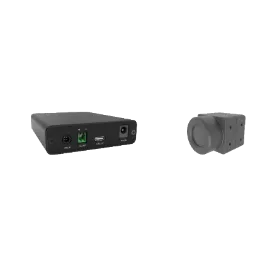
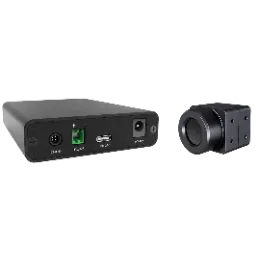
4. Hardware and Interface Customization
A thermal imaging camera may need to work as an independent observation device or as one component within a larger electronic system.
In the second situation, hardware and interface compatibility become essential parts of the customization process.
Even when the thermal imaging module itself performs as expected, incompatible power supplies, connectors, video outputs, or communication arrangements may prevent successful system integration.
Key hardware customization areas
1. Product enclosure
The enclosure should match the intended equipment structure, installation environment, and mechanical requirements.
Buyers should communicate the available installation space, external dimensions, material requirements, and relevant environmental protection expectations.
2. Power supply configuration
Different equipment platforms may have different electrical requirements.
The manufacturer should confirm the supported input voltage, power consumption, connector arrangement, and relevant operating conditions.
3. Mounting structures
A customized mounting arrangement may be required when the thermal imaging camera is integrated into another device.
Buyers should provide mounting dimensions, fixing positions, installation drawings, and any relevant mechanical restrictions.
4. Video output
Some projects require specific video output arrangements to connect the thermal imaging equipment with an external display or processing platform.
The supported output type and signal requirements should be confirmed for the selected hardware configuration.
5. Wireless transmission
Depending on the product and project requirements, wireless transmission may be considered as part of the hardware configuration.
The communication method, operating distance, power requirements, and compatibility should be evaluated before development.
6. Environmental protection rating
For equipment used outdoors or in demanding environments, the required IP rating should be identified during the initial design stage.
The final protection level must be confirmed through the relevant product design and validation process.
Interface compatibility checklist
| Requirement | Information to Confirm |
|---|---|
| Power Input | Voltage, current, and connector |
| Video Output | Supported video format and interface |
| Communication | Required data interface and protocol |
| Wireless Function | Whether wireless transmission is required |
| Mounting | Dimensions, fixing points, and installation structure |
| Enclosure | Size, material, and structural requirements |
| Protection | Required IP rating and environmental conditions |
JOVSTAR identifies enclosure, power supply, mounting, video output, wireless transmission, and IP rating as hardware and interface customization options.
For system integration projects, these requirements should be documented before prototype development.
5. Image Processing and Software Development
Image processing and software customization can be just as important as the detector and optical configuration.
For some OEM buyers, the standard imaging functions are sufficient. Others may require specific image presentation, customized display information, data recording, or integration with an external system.
The software requirements should therefore be discussed alongside the hardware design.
Image processing customization
Image processing helps optimize how infrared information is displayed and interpreted.
Depending on the selected platform and project requirements, customization may involve:
- Image enhancement.
- Color restoration.
- Target sharpening.
- Display optimization.
- Customized image presentation.
These functions should be evaluated according to the intended observation task and available hardware resources.
Custom on-screen display
The on-screen display (OSD) is the information presented on the device’s screen.
OEM customers may require specific information arrangements or a customized display interface.
Possible requirements include:
- Brand identification.
- Product-specific interface layouts.
- Relevant system status information.
- Measurement or ranging information, where supported.
- Customized language and display arrangements.
The actual OSD functions depend on the selected product platform and agreed development scope.
Data recording and communication integration
Some projects require image or operational data to be recorded or transferred to another device.
In these situations, buyers should specify:
- What information needs to be recorded.
- Where the information will be stored.
- Which external devices need to receive the data.
- Which communication interfaces are required.
- Whether a specific data format or protocol must be supported.
For more complex systems, software integration may also involve coordination between the thermal imaging module, laser ranging components, and external terminals.
Why software requirements should be confirmed early
Software changes can affect hardware selection, system architecture, development time, and validation requirements.
If a buyer introduces additional interface or data functions after prototype completion, further engineering work may be necessary.
For this reason, OEM customers should prepare a functional requirements document before development begins.
JOVSTAR’s image processing and software capabilities include image enhancement, color restoration, target sharpening, custom OSD, data recording, and project-level system integration.
Its engineering platform also includes a dedicated Image Processing Laboratory and Ranging Algorithm Laboratory.
6. Mechanical Structure and Mounting Customization
The mechanical structure determines how the thermal imaging equipment is packaged, installed, and integrated with other devices.
For OEM brands, mechanical customization may also be necessary to establish a consistent product appearance or match an existing product family.
A suitable mechanical design must consider the available internal space, component arrangement, installation requirements, and the operating environment.
Important mechanical requirements
Product dimensions and layout
Buyers should provide the available installation space and desired external dimensions.
If the thermal imaging camera needs to fit into an existing device, the manufacturer’s engineers should review the available space before confirming the design.
Mounting interface
Mounting holes, fixing positions, mechanical connections, and installation direction should be clearly defined.
This is especially important when the thermal imaging equipment is integrated into an existing platform.
Enclosure structure
The enclosure must accommodate the optical module, electronic hardware, power components, and other required elements.
Its structure should also be evaluated against the project’s environmental protection requirements.
Product appearance and branding
OEM customers may require specific housing colors, surface finishes, brand logos, labels, or other approved visual details.
These requirements should be documented to maintain consistency across production batches.
Assembly and maintenance considerations
A customized structure should also allow the required assembly, inspection, and maintenance operations to be carried out appropriately.
For long-term commercial projects, ease of servicing should be considered alongside the initial product appearance.
What should be included in a mechanical design brief?
| Item | Buyer Information |
|---|---|
| External Dimensions | Required length, width, and height |
| Installation Space | Available space within the host equipment |
| Mounting | Drawings, fixing points, and mounting direction |
| Enclosure | Material, color, and structural requirements |
| Branding | Logo, label, and identification requirements |
| Protection | Environmental and IP protection requirements |
| Maintenance | Required access for inspection or servicing |
The more complete the mechanical information is at the beginning, the easier it becomes to evaluate the feasibility of the proposed product structure.
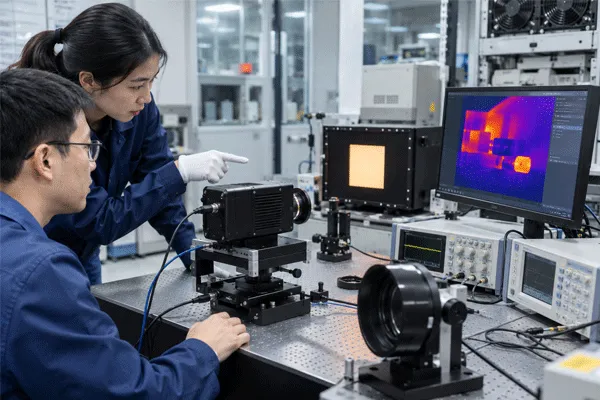
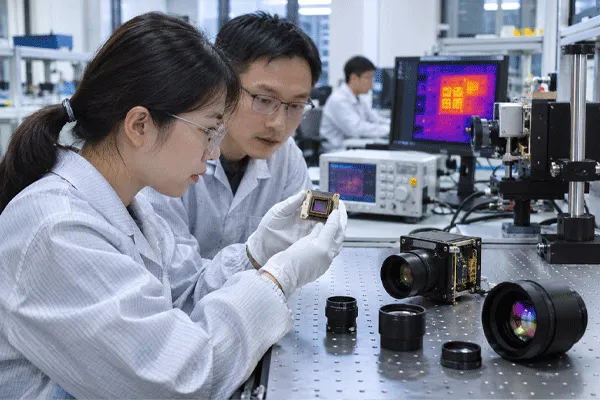
7. Prototype Development and Validation
Prototype development is the stage where technical requirements are translated into a physical product or integrated system.
For OEM thermal camera projects, this stage is essential because it allows the buyer and manufacturer to evaluate whether the proposed configuration meets the agreed requirements before moving into mass production.
A successful prototype should be assessed against documented acceptance criteria rather than subjective impressions alone.
Stage 1: Requirements and Technical Proposal
The project begins with a detailed discussion of the buyer’s application and technical requirements.
Important information includes:
- Intended application and operating environment.
- Required thermal detector configuration.
- Lens and optical module requirements.
- Hardware interfaces and power supply.
- Image processing and software functions.
- Mechanical dimensions and mounting arrangements.
- Branding and documentation requirements.
- Estimated order quantity and delivery expectations.
JOVSTAR’s engineering team reviews the requirements and prepares a proposed configuration, system architecture, and development plan.
Stage 2: Engineering Development and Prototype Production
After the technical proposal is confirmed, the project moves into engineering development.
Depending on the agreed scope, this may involve:
- Optical module configuration.
- Infrared imaging system configuration.
- Hardware and interface development.
- Mechanical structure design.
- Image processing and software development.
- Assembly of the prototype.
The purpose is to establish a working configuration that can be evaluated against the original requirements.
Stage 3: Prototype Validation
The prototype should undergo testing based on the project’s agreed acceptance criteria.
Relevant evaluation areas may include:
| Validation Area | Main Evaluation |
|---|---|
| Imaging Performance | Image output and agreed imaging functions |
| Optical Configuration | Focal length and field-of-view requirements |
| Hardware | Power supply and interface compatibility |
| Software | Required display, recording, and control functions |
| Mechanical Structure | Dimensions, mounting, and assembly |
| Environmental Reliability | Applicable temperature, humidity, vibration, or protection requirements |
| System Integration | Compatibility with the customer’s equipment |
Not every project requires the same tests. The validation plan should reflect the product configuration and intended operating environment.
If issues are identified, the engineering team and buyer should agree on the necessary adjustments before approving the design.
Stage 4: Design Confirmation Before Production
Once the prototype meets the agreed acceptance requirements, the final configuration should be documented.
This includes the approved technical specifications, product structure, interfaces, software functions, accessories, and relevant quality requirements.
Any changes after approval should be communicated and evaluated before they are introduced into production.
JOVSTAR’s OEM/ODM development process includes engineering design, prototyping, and validation to verify performance, reliability, and compliance before production.
OEM Thermal Camera Customization: From Technical Requirements to Production
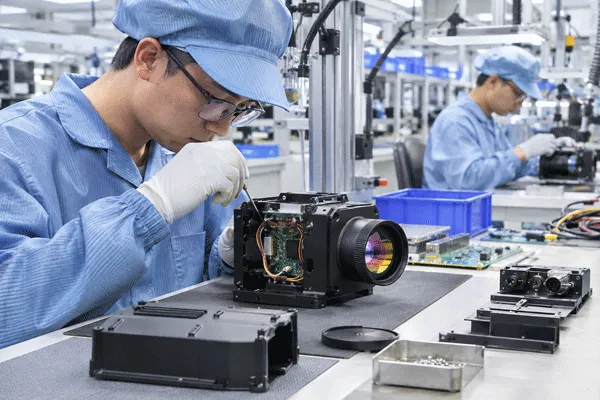
8. Mass Production and Technical Support
After prototype approval, the project can move into mass production.
However, successful production involves more than manufacturing the required number of units. The manufacturer must maintain consistency with the approved prototype and agreed technical specifications.
For OEM brands and distributors, this is particularly important because product variations between batches can affect customer experience, inventory management, and after-sales responsibilities.
Production requirements for OEM thermal cameras
1. Confirm the approved product configuration
Before production begins, both parties should confirm the final technical specifications and agreed product configuration.
This should include the detector, optical module, hardware, software, enclosure, interfaces, accessories, and branding requirements.
2. Maintain production consistency
The manufacturing process should follow the approved product configuration and relevant inspection requirements.
Changes to important components or product functions should be communicated and reviewed before implementation.
3. Conduct assembly and functional testing
The finished equipment should undergo relevant assembly inspections, calibration, and functional verification.
The applicable testing items should be defined according to the product and project requirements.
4. Prepare technical documentation
OEM customers may need product datasheets, operation manuals, inspection records, test reports, and interface documentation.
The required documents should be agreed upon during project planning.
5. Coordinate packaging and delivery
Packaging, product identification, shipping arrangements, and delivery schedules should follow the confirmed commercial requirements.
Technical support throughout the product lifecycle
Long-term OEM cooperation may involve technical assistance beyond initial delivery.
Depending on the project, support may include:
- Technical consultation and troubleshooting.
- Maintenance and repair coordination.
- Product configuration assistance.
- Software or system upgrades.
- Technical documentation updates.
- Engineering communication for future product revisions.
JOVSTAR’s project delivery process covers controlled manufacturing, assembly, testing, and technical documentation, followed by lifecycle technical support, maintenance, upgrades, and engineering assistance.
For customized projects, the company can provide technical specifications, test reports, operation manuals, and SDK interface documentation where applicable.
Learn more about JOVSTAR OEM and ODM Customization Services.
Conclusion: Turn Your Thermal Imaging Requirements into a Production-Ready Solution
Developing an OEM thermal camera requires coordination between the buyer’s application requirements and the manufacturer’s engineering and manufacturing capabilities.
From detector and optical module selection to hardware interfaces, image processing, mechanical design, prototype validation, and mass production, each stage contributes to the final product’s suitability and consistency.
For international OEM brands, equipment manufacturers, and system integrators, a clearly defined technical specification and structured development process can reduce unnecessary design changes and make cooperation more efficient.
JOVSTAR provides OEM manufacturing and ODM development for professional thermal imaging systems and optoelectronic equipment. Supported by optical design, circuit engineering, image processing, ranging algorithms, and system integration capabilities, the company works with customers to evaluate technical requirements and develop application-matched equipment configurations.
Planning an OEM thermal camera project?
Submit your application details, preferred product configuration, technical requirements, and estimated purchasing volume to JOVSTAR. Our engineering team can review your project requirements and discuss a suitable customization and production approach.
Explore JOVSTAR Thermal Imaging Cameras
Submit Your OEM/ODM Project Requirements
FAQ
What can be customized in an OEM thermal camera?
Depending on the selected product and project requirements, customization may include infrared detector configuration, optical modules, focal length, field of view, enclosure, power supply, mounting structures, video outputs, wireless transmission, image processing, OSD, and software integration. The final scope should be confirmed through technical evaluation.
What is the difference between OEM and ODM thermal cameras?
OEM manufacturing follows a confirmed product configuration, branding, and delivery requirements. ODM development involves broader product or system development based on the manufacturer's engineering platform. OEM is generally suitable when the product configuration is already defined, while ODM is more suitable when additional engineering development is needed.
What information should I provide when requesting an OEM thermal camera quotation?
Prepare your intended application, operating environment, required detector and lens configuration, observation distance, field of view, hardware interfaces, power requirements, mechanical drawings, software functions, branding requirements, estimated order quantity, and expected delivery schedule. The more complete the information, the easier it is to evaluate technical feasibility.
Can an OEM manufacturer customize the thermal detector and lens?
A manufacturer with relevant engineering capabilities may support detector configuration and optical module customization. This can involve evaluating detector resolution, imaging performance, focal length, field of view, optical transmission, and distortion correction. The available options depend on the selected platform and technical feasibility.
How long does an OEM thermal camera project take?
The development schedule depends on the degree of customization, component availability, engineering complexity, prototype requirements, and validation process. Buyers should request a project-specific timeline covering technical confirmation, development, prototype testing, production, and delivery rather than relying on a universal lead time.
Need Help Choosing the Right Product?
Tell us your application, target and operating conditions. The JOVSTAR engineering team will recommend a configuration and prepare a quote.
Get a Quote