
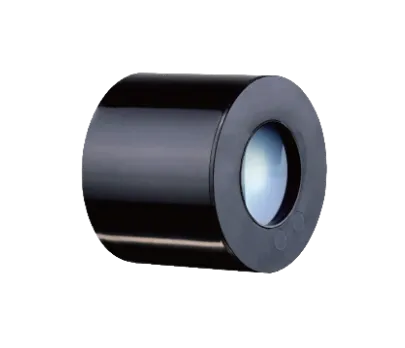
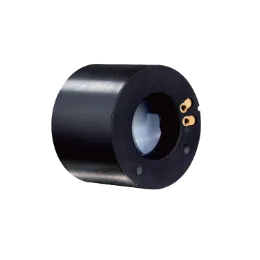


Vehicle-Mounted Thermal Cameras for Fleets: OEM Integration and Procurement Guide
Managing vehicles after dark creates a difficult challenge: drivers need to identify potential hazards while fleet operators need equipment that works reliably across different vehicle types. Poor visibility, incompatible displays, and inconsistent installation can increase project risks. Vehicle-mounted thermal cameras offer an additional observation capability when properly selected and integrated.
Vehicle-mounted thermal cameras are infrared imaging systems designed to detect heat differences around vehicles, supporting nighttime observation, pedestrian awareness, and professional mobile monitoring. For fleet operators, OEM brands, and system integrators, choosing the right solution requires evaluating imaging performance, AI-assisted recognition, electrical compatibility, environmental reliability, installation requirements, supplier capabilities, and long-term technical support.
Vehicle-Mounted Thermal Cameras for Fleets: OEM Integration and Procurement Guide
1. Why Are Vehicle-Mounted Thermal Cameras Important for Commercial Fleets?
Commercial vehicles operate in environments where conventional cameras and headlights may provide limited visual information. Nighttime logistics, construction sites, industrial parks, and poorly illuminated roads introduce different visibility challenges. Drivers may encounter pedestrians, machinery, animals, or other obstacles before they become clearly visible under normal lighting.
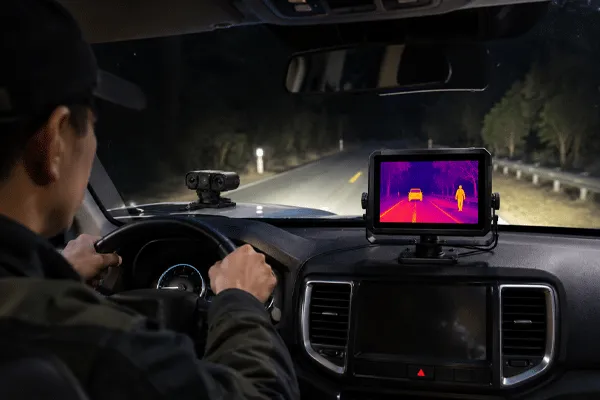
A vehicle-mounted thermal imaging camera detects infrared radiation rather than relying on reflected visible light. This allows it to reveal temperature differences between people, vehicles, surrounding structures, and road surfaces, even in complete darkness.
For fleet operators, the value extends beyond providing a thermal view. A properly integrated system can improve the availability of visual information and support earlier hazard awareness. However, it must complement mirrors, headlights, conventional cameras, driver judgment, and other approved safety equipment rather than replace them.
Common fleet applications
| Application | Visibility challenge | Potential value of thermal imaging |
|---|---|---|
| Logistics and delivery fleets | Nighttime roads and poorly lit loading areas | Additional pedestrian and roadside observation |
| Construction vehicles | Dust, complex work zones, moving machinery | Heat-based observation of workers and equipment |
| Industrial transport | Low-light facility roads and restricted visibility | Improved awareness around industrial environments |
| Emergency response vehicles | Nighttime operations and changing site conditions | Additional observation of people and surrounding objects |
| Passenger transport | Pedestrians near roads and stations | Supplemental nighttime pedestrian awareness |
| Utility maintenance fleets | Remote roads and infrastructure sites | Observation in areas with limited lighting |
These use cases require different sensor configurations, mounting arrangements, and driver interfaces. A system suitable for a passenger car may not be appropriate for a heavy commercial vehicle.
For procurement teams, the first question should be: What visibility problem must the equipment solve?
That answer determines nearly every specification that follows.
2. How Does an Automotive Thermal Imaging Camera Work?
A thermal imaging camera uses an infrared sensor to detect differences in the thermal energy emitted by objects. Unlike a conventional visible-light camera, it does not require headlights or daylight to produce an image.
Many automotive thermal imaging systems use uncooled vanadium oxide (VOx) infrared detectors. These sensors respond to long-wave infrared radiation and convert temperature differences into image data that can be processed and displayed.
In a typical vehicle camera system, the process includes infrared detection, signal processing, image enhancement, video output, and optional AI-assisted recognition.
The thermal imaging workflow can be summarized as follows:
- An infrared lens collects radiation from the observed scene.
- The thermal sensor converts the received energy into electrical signals.
- Image-processing algorithms improve the visibility of temperature differences.
- The system sends processed images to a compatible monitor or display.
- Where supported, AI software analyzes the images and highlights recognized objects.
- The driver or operator uses the additional information to assess the surrounding environment.
The quality of the resulting image depends on several factors. These include sensor resolution, thermal sensitivity, lens design, field of view, image processing, and environmental conditions.
A camera with a higher pixel count may provide more scene detail, but resolution alone does not determine whether the system is suitable for a particular fleet.
For professional procurement, sensor quality must be evaluated together with the complete system architecture.
3. Which Thermal Camera Specifications Matter Most to OEM Buyers?
An OEM or fleet buyer should avoid choosing automotive thermal equipment based only on advertised detection distance or resolution.
A more reliable approach is to evaluate imaging specifications alongside installation and operating requirements.
Key technical parameters
| Parameter | Why it matters | What buyers should verify |
|---|---|---|
| Thermal resolution | Affects image detail and spatial coverage | Available sensor configurations |
| Detector type | Influences thermal imaging architecture | VOx or other specified technology |
| NETD | Indicates sensitivity to small temperature differences | Measured value and test conditions |
| Lens focal length | Affects observation angle and target detail | Suitable lens for intended application |
| Field of view | Determines visible scene coverage | Forward view or close-range work-zone needs |
| Frame rate | Influences moving-image presentation | Actual sensor and output frame rates |
| AI recognition | Supports identification of configured object classes | Supported objects and operating limitations |
| Protection rating | Indicates enclosure resistance to specified environmental exposure | Exact IP rating by component |
| Supply voltage | Determines compatibility with vehicle electrical systems | Input range and transient protection |
| Operating temperature | Influences reliability in hot and cold environments | Verified temperature limits |
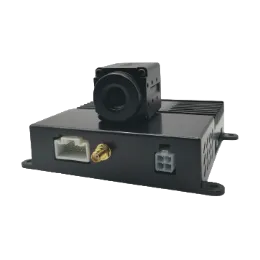
JOVSTAR offers vehicle thermal imaging configurations with 256 × 192, 384 × 288, and 640 × 512 sensor resolutions across selected product families.
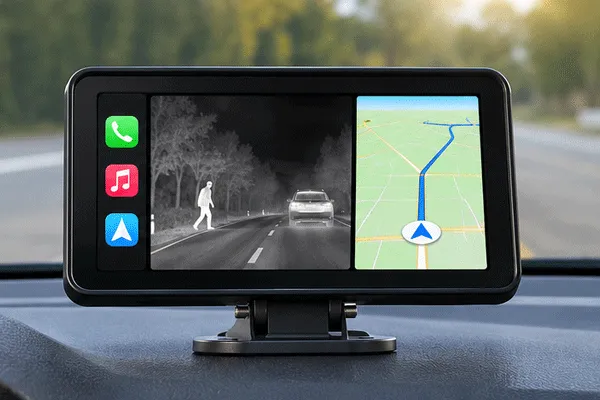
For example, the JV-ADS-S5 thermal imaging night vision system offers different thermal camera and lens configurations, a 5-inch display, and AI-assisted recognition functions.
The JV-ADS-S7 system is available with a dedicated display and configurable thermal camera options for different vehicle applications.
Importantly, 640 × 512 is a sensor resolution, not a guarantee of superior performance in every installation. A fleet operating at low speed in a crowded industrial area may benefit more from suitable scene coverage than maximum long-distance target detail.
Buyers should request full specifications for the proposed configuration rather than relying on a general catalog description.
For a detailed explanation of detection, recognition, and AI warning distances, see JOVSTAR’s car thermal camera range guide.
Vehicle-Mounted Thermal Cameras for Fleets: OEM Integration and Procurement Guide
4. What Are the Main Challenges of Integrating Thermal Imaging Systems into Vehicles?
Installing one thermal imaging system for demonstration purposes is different from integrating identical equipment across dozens or hundreds of vehicles.
A successful OEM project requires compatibility between the infrared camera, processing unit, vehicle electrical system, display, mounting position, and operator interface.
Electrical compatibility
Passenger vehicles commonly use 12 V electrical systems, while many commercial platforms operate with nominal 24 V systems.
Selected JOVSTAR vehicle thermal imaging products support wide DC input ranges. For example, the AA Series AHD system specifies DC 9–36 V input, while the JV-ADS-S5 supports DC 9–32 V.
However, nominal voltage compatibility alone does not confirm suitability. Engineering teams must also review startup behavior, electrical transients, grounding, cable protection, and the installation environment.
Mechanical installation
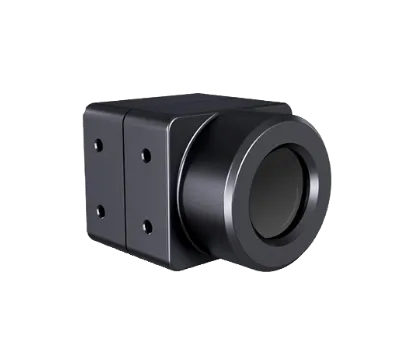
Vehicle-mounted infrared cameras are exposed to vibration, moisture, temperature changes, and road contamination.
Mounting structures should provide stable positioning without obstructing other vehicle equipment. Installers must also consider maintenance access, cable routing, connector sealing, and the possibility of camera obstruction.
Most long-wave infrared cameras cannot operate effectively through an ordinary automotive windshield. The camera generally needs an external mounting position with a suitable infrared-transmitting protective window.
Software and system compatibility
Different fleets use different displays, controllers, operating systems, and communication architectures.
A system may need to provide video output to a standalone monitor, an existing vehicle display, or a third-party recording platform.
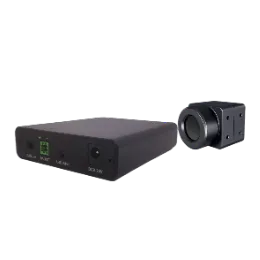
JOVSTAR offers multiple output configurations, including USB, AHD, HDMI, and CVBS, depending on the model.
For an interface-by-interface explanation, refer to How to Connect a Car Thermal Camera: CarPlay to HDMI.
Before purchasing equipment in quantity, fleet integrators should complete a compatibility assessment using an actual representative vehicle.
5. How Should Fleet Operators Evaluate Thermal Cameras in Real Driving Conditions?
Laboratory specifications provide an important starting point, but real operating conditions can introduce additional challenges.
Thermal contrast changes with the weather, road temperature, nearby structures, and surrounding objects. A pedestrian may appear clearly against a cool background but become harder to distinguish when surface temperatures are similar.
Rain and fog also affect thermal observation. Although infrared imaging can offer advantages over visible-light imaging in darkness and certain low-visibility conditions, heavy precipitation and dense fog can reduce image quality and effective detection capability.
Recommended field evaluation conditions
| Test condition | Evaluation objective |
|---|---|
| Urban nighttime road | Observe pedestrians and vehicles against mixed heat sources |
| Unlit rural road | Assess usable image detail beyond normal illuminated areas |
| Industrial work zone | Evaluate visibility of workers, machinery, and nearby obstacles |
| Rain or mist | Record changes in image contrast and observation capability |
| Hot daytime environment | Assess thermal contrast when surrounding surfaces are warm |
| Cold weather | Verify startup behavior, camera window condition, and image availability |
| Vehicle vibration | Observe image stability and mounting performance |
| Extended operation | Check temperature behavior, reliability, and system continuity |
Testing should include both stationary and moving conditions where safe and legally permitted.
For moving vehicles, the evaluation should be conducted on controlled routes by qualified personnel. Operators must not rely on thermal images as their only source of driving information.
How should test results be recorded?
A practical test report should include the camera model, lens configuration, vehicle type, environmental conditions, target description, observations, system behavior, and any failures or anomalies.
Where measurable data are available, record them consistently across all tested configurations.
Avoid declaring a system suitable for an entire fleet after one successful nighttime demonstration. Repeatability is particularly important when several vehicle platforms or operating environments are involved.
6. How Can AI-Assisted Thermal Imaging Support Driver Awareness?
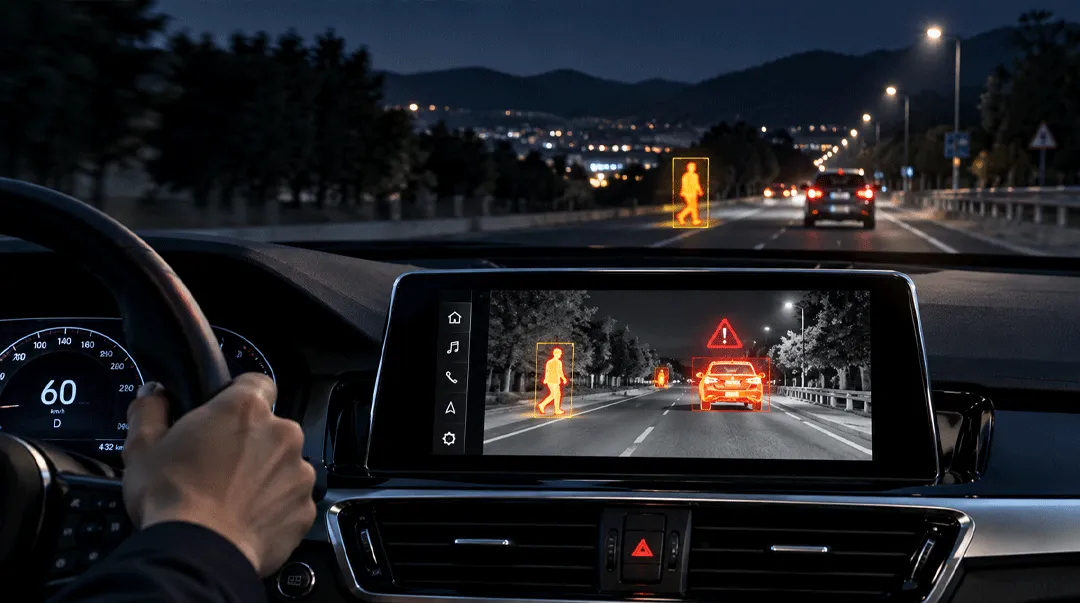
Modern automotive infrared systems may combine thermal imaging with AI algorithms designed to recognize pedestrians, vehicles, and other supported object categories.
The thermal sensor captures the scene, while the AI processor analyzes patterns and applies recognition rules.
In selected JOVSTAR vehicle systems, a 3 TOPS neural processing unit supports real-time image analysis and recognition functions.
The JV-ADS-S5, for example, supports pedestrian, vehicle, and animal recognition in specified configurations. Other systems support pedestrian and vehicle recognition with audible or visual warning functions.
AI recognition is different from thermal detection.
Detection means that an object produces enough image information to become visible or distinguishable. AI recognition means that the software has classified the object according to its supported categories and confidence criteria.
These functions should not be treated as interchangeable.
What should fleet buyers ask about AI warnings?
Buyers should review the recognition categories, alert thresholds, supported operating speeds, response behavior, and adjustment options.
They should also examine what happens when the system incorrectly identifies an object or fails to produce a warning.
The goal is to provide useful information without overwhelming the driver with unnecessary alerts.
Additional engineering questions include whether alerts remain available during navigation, whether warning volume can be adjusted, and how the system behaves during startup or temporary signal loss.
Thermal imaging and AI can complement existing driver-assistance features, but buyers should not assume that a camera system provides automatic braking, certified collision avoidance, or full autonomous driving capability.
Those functions require separate engineering validation and documented vehicle-level safety assessment.
7. Which Vehicle-Mounted Thermal Imaging Systems Fit Different Fleet Projects?
A professional buyer rarely needs the most expensive configuration for every vehicle.
The more useful approach is to match system architecture with the intended application, installation resources, maintenance capabilities, and operational requirements.
JOVSTAR offers several product families within its vehicle-mounted thermal cameras portfolio.
JOVSTAR product options for different procurement requirements
| Product or system | Main configuration | Potential project fit |
|---|---|---|
| JV-ADS-S5 | 5-inch display, thermal imaging and AI recognition | Customized observation and warning configurations |
| JV-ADS-S7 | Dedicated 7-inch display and AI-assisted alerts | Fleet retrofit with independent display |
| JV-ADS-S7P | Integrated display with multimedia connectivity | Vehicles requiring combined display functions |
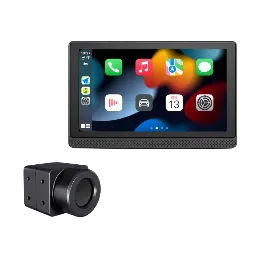
| Thermal Camera for CarPlay | Wired CarPlay-compatible output | Compatible passenger vehicle installations |
| AA Series AHD | AHD video output and external display integration | Commercial vehicle and third-party monitor integration |
| AH Series HDMI | HDMI output and external display support | Specialized display and engineering projects |
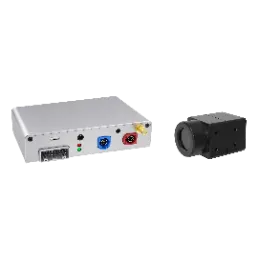
| CVBS and USB Output Universal Host | Multiple output interfaces | Selected multi-display or retrofit applications |
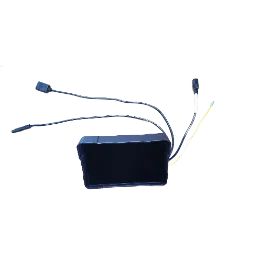
| Dedicated Vehicle Thermal Imaging System | Factory-display integration through a suitable decoder | Supported vehicle-specific installations |
These are configuration examples, not universal compatibility guarantees.
For instance, a logistics fleet using different truck models may favor a system with a separate display and a straightforward installation process.
An automotive electronics manufacturer developing an integrated product may prefer a video-output unit that can connect to its existing hardware.
A distributor serving multiple markets may require several configurations rather than a single fixed model.
Do fleet projects need 360-degree thermal imaging?
Not necessarily.
Some specialized projects require observation around multiple sides of a vehicle, but full situational awareness cannot be assumed from one forward-facing camera.
A 360-degree concept requires separate consideration of sensor placement, coverage overlap, image processing, display arrangement, and integration architecture.
JOVSTAR’s existing automotive product pages should not be interpreted as offering a standard 360-degree thermal system unless that configuration is separately confirmed.
For larger multi-sensor projects, buyers can explore the Vehicle-Mounted All-Weather Situational Awareness Solution.
8. What Reliability and Quality Tests Should B2B Buyers Require?
Environmental reliability is a major purchasing concern when thermal cameras are installed on vehicles that operate daily.
Compared with a handheld device, a permanently installed camera may experience prolonged vibration, repeated temperature cycling, water exposure, road debris, and extended operating hours.
A protective enclosure rating is important, but it should not be the only acceptance criterion.
For example, IP67 indicates a defined level of protection against dust ingress and temporary immersion under specified test conditions. It does not automatically guarantee resistance to every chemical, pressure-washing procedure, vibration profile, or long-term environmental exposure.
Selected JOVSTAR thermal camera products specify IP67-rated camera housings. The relevant product datasheet should determine which components carry that rating.
Suggested supplier quality-assurance checklist
| Evaluation area | Documents or evidence to request |
|---|---|
| Product specifications | Model-specific datasheet and revision information |
| Environmental protection | Applicable IP test documentation |
| Temperature reliability | Operating and storage temperature data |
| Vibration resistance | Available vibration test methods and results |
| Imaging performance | Agreed image quality and functional acceptance criteria |
| Electrical compatibility | Input voltage requirements and electrical test evidence |
| Manufacturing consistency | Inspection procedures and traceability arrangements |
| Software reliability | Firmware identification and change-control process |
| After-sales support | Warranty terms, troubleshooting process, and spare-part policy |
For international procurement, buyers should also clarify which certifications and compliance documents are available for their destination market.
Do not assume that an environmental rating or general quality certificate confirms automotive regulatory compliance.
A vehicle electronics project may require additional testing or approvals depending on the installation, market, and intended function.
These requirements should be identified before the commercial order is finalized.
9. How Can OEM/ODM Customization Improve Fleet Integration?
Standard products are useful for small installations and distributor inventory. However, larger projects may require adjustments to mechanical design, hardware interfaces, software behavior, or branded product presentation.
This is where OEM and ODM cooperation becomes important.
OEM manufacturing typically follows a confirmed product design or configuration, while ODM development may involve broader engineering work based on the customer’s requirements.
JOVSTAR supports OEM/ODM optoelectronic equipment development, including hardware configuration, infrared imaging, interface selection, software functions, mounting structures, and system integration.
Customization requirements to consider
Hardware and optical configuration
Buyers may need different detector resolutions, lens configurations, physical dimensions, protective housings, or mounting accessories.
Software and warning functions
A project may require changes to supported alert behavior, user interface language, displayed information, or configuration settings.
Video and data connectivity
Requirements may involve supported wired interfaces, custom integration protocols, or optional wireless functions.
Wi-Fi, external data communication, and other specialized connectivity features should be treated as project-specific requirements rather than assumed standard capabilities.
Private-label and distributor requirements
International distributors may request approved branding, packaging, documentation language, and consistent product identification across multiple purchase orders.
For engineering teams, customization should begin with a written technical requirements document.
The document should identify what must remain standard, what can be configured, and what requires new development.
This helps both the buyer and manufacturer control engineering changes, project cost, and delivery expectations.
Vehicle-Mounted Thermal Cameras for Fleets: OEM Integration and Procurement Guide
10. How Should Importers and Fleet Operators Select a Reliable Thermal Camera Manufacturer?
Selecting a supplier involves more than comparing a price point or reviewing attractive nighttime images.
For international B2B procurement, the strongest supplier relationship is usually built around clear technical communication, predictable production, transparent documentation, and dependable after-sales support.
A low initial equipment price may become less attractive if installation failures, inconsistent firmware, unavailable replacement parts, or extended technical delays increase the total project cost.
Five steps for evaluating suppliers
Step 1: Define the application and operating environment
Specify the vehicle type, observation task, operating temperature, installation location, approximate fleet size, and preferred system architecture.
Step 2: Review the manufacturer’s relevant products
Confirm that the supplier offers actual automotive thermal imaging equipment instead of repackaging unrelated handheld products for vehicle use.
Step 3: Request technical documentation
Ask for model-specific specifications, wiring requirements, electrical limits, installation guidance, and available quality documentation.
Step 4: Complete sample testing
Evaluate representative equipment on the intended vehicle platform. Record any compatibility issues, image-quality limitations, and installation difficulties before placing a bulk order.
Step 5: Confirm production and after-sales arrangements
Agree on the approved product configuration, lead time, inspection criteria, spare components, firmware support, warranty terms, and issue-resolution process.
What should be included in a procurement request?
| Information | Example buyer requirement |
|---|---|
| Vehicle platform | Commercial truck, passenger car, RV, or construction machine |
| Fleet quantity | Prototype order and expected production volume |
| Operating conditions | Night roads, industrial sites, hot or cold regions |
| Imaging requirements | Required scene coverage and acceptable image quality |
| Display architecture | Independent monitor or existing vehicle system |
| Electrical requirements | Vehicle nominal voltage and available power supply |
| Mechanical requirements | Mounting location, enclosure limits, cable routing |
| AI functions | Required recognized object categories and warning behavior |
| Customization | Branding, software functions, interfaces, documentation |
| Delivery expectations | Sample approval, production milestones, destination market |
At JOVSTAR, our focus is to support professional equipment buyers, distributors, OEM partners, and integrators with application-matched optoelectronic observation equipment.
Our capabilities include optical design, hardware development, image processing, and system integration. We work with customers to assess practical requirements and identify suitable standard or customized configurations.
For a productive technical discussion, buyers should provide vehicle details, installation limitations, expected quantities, and the primary observation challenges.
A clear project specification helps reduce unnecessary revisions and supports a more efficient procurement process.
Conclusion: Build a Reliable Vehicle Thermal Imaging Procurement Strategy
Vehicle-mounted thermal cameras can provide valuable additional observation capability for commercial fleets, vehicle electronics manufacturers, and professional system integrators.
However, successful adoption depends on choosing more than a suitable infrared sensor. The complete solution must match the vehicle platform, operational environment, installation process, and long-term maintenance requirements.
Key takeaways:
- Define the fleet’s observation requirements before selecting thermal imaging equipment.
- Evaluate sensor performance, field of view, AI functions, and image quality together.
- Confirm electrical compatibility, installation arrangements, and environmental protection.
- Conduct representative vehicle testing before approving large-scale deployment.
- Compare suppliers based on technical support, documentation, customization, and supply consistency.
- Choose OEM/ODM solutions when standard products cannot fully meet project requirements.
Looking for a reliable vehicle-mounted thermal camera manufacturer?
Shandong Jovstar Electronic Technology Co., Ltd. supplies professional thermal imaging equipment and customized optoelectronic solutions for international B2B customers.
Whether you are developing an automotive night vision product, evaluating a commercial fleet upgrade, or sourcing thermal imaging equipment for wholesale distribution, JOVSTAR can help you review technical requirements and explore suitable configurations.
Explore JOVSTAR Vehicle-Mounted Thermal Cameras
Contact JOVSTAR for OEM/ODM Solutions
FAQ
Are vehicle-mounted thermal cameras suitable for commercial trucks?
Yes, provided the selected system meets the truck's electrical, mechanical, environmental, and display requirements. Commercial vehicle projects should confirm voltage compatibility, mounting stability, cable protection, and the driver's viewing arrangement before bulk installation.
Can automotive thermal imaging cameras work in complete darkness?
Yes. Thermal cameras detect infrared radiation emitted by objects and do not require visible illumination. However, thermal image quality depends on temperature contrast and environmental conditions. Heavy rain, dense fog, and low thermal contrast may reduce effective observation performance.
Is a 640 × 512 thermal camera always better than a 384 × 288 camera?
Not necessarily. Higher resolution can provide additional image detail or support wider scene coverage, depending on the lens and optical configuration. Buyers should evaluate usable image quality, observation requirements, field of view, system cost, and installation constraints together.
Can JOVSTAR customize vehicle thermal cameras for OEM brands?
JOVSTAR provides OEM/ODM services for selected optoelectronic equipment and integrated systems. Possible customization areas include product configuration, mounting structures, interfaces, software functions, and branding. Technical feasibility, development scope, order quantities, and delivery terms should be confirmed for each project.
Do vehicle-mounted thermal cameras replace conventional headlights or driver-assistance systems?
No. Thermal imaging provides additional visual information and may support pedestrian or vehicle awareness, but it does not replace headlights, mirrors, approved safety systems, or responsible driving. Advanced functions such as automatic braking require separate integration and validation.
What should distributors provide when requesting a wholesale quotation?
Distributors should identify their target markets, preferred product configurations, estimated order volumes, branding requirements, technical documentation needs, and expected delivery schedules. This allows the manufacturer to prepare a quotation based on the actual procurement requirements.
Need Help Choosing the Right Product?
Tell us your application, target and operating conditions. The JOVSTAR engineering team will recommend a configuration and prepare a quote.
Get a Quote