
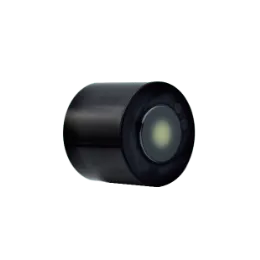


How Far Can a Car Thermal Camera See? Range Explained
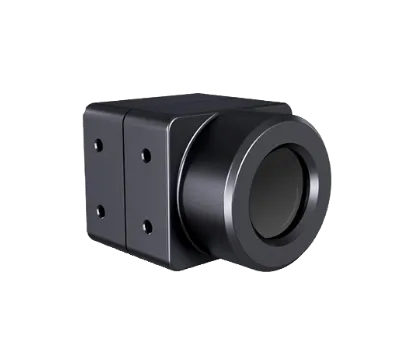
With the standard 9.1 mm lens, a JOVSTAR car thermal camera detects a person at 859 m and a vehicle at 1,263 m, recognizes them at 214 m and 316 m, and gives AI warnings for people within about 80 m and vehicles within about 200 m. Those three figures answer different questions, and the lens you choose shifts all of them. This guide explains each one and how to match it to your driving. For the full system range, see our vehicle thermal camera selection guide.
Three Distances, Three Questions
| Distance (9.1 mm lens) | Person | Vehicle | What it means |
|---|---|---|---|
| Detection | 859 m | 1,263 m | A warm object is visible on the screen |
| Recognition | 214 m | 316 m | The driver can tell it is a person or a vehicle |
| AI recognition and warning | About 80 m | About 200 m | The system marks the target and alerts the driver |
Detection is when something appears; recognition is when the driver can act on what it is; AI recognition is when the system itself identifies the target and warns. The AI distance is shorter because the software needs more pixels on the target to classify it reliably, with a stated identification rate of 95% or higher.
Why Headlights Fall Short
Dipped headlights light the road for a limited distance, and a person in dark clothing at the roadside may only become visible late. Glare from oncoming traffic makes it worse. A thermal camera needs no light at all: it sees the heat of people, animals and engines, so they stand out at night, in glare, smoke and haze, well beyond the reach of the headlights.
What Distance Means in Seconds
| Speed | Time to cover 80 m | Time to cover 214 m |
|---|---|---|
| 50 km/h | 5.8 s | 15.4 s |
| 80 km/h | 3.6 s | 9.6 s |
| 100 km/h | 2.9 s | 7.7 s |
On faster roads, the driver gains most from watching the thermal image for early detection; at town speeds, the AI warnings give useful reaction time. Several JOVSTAR systems link warnings to vehicle speed through GPS, so alerts adapt to how fast the vehicle is moving.
How the Lens Changes Range and Coverage
All JOVSTAR car cameras use 12 μm VOx detectors. With the same pixel size, range depends on the lens focal length, and coverage on the lens and the resolution. The JV-ADS-S5 offers seven camera options that show the trade-off:
| Camera | Field of view | Human / vehicle recognition | AI human / vehicle / animal |
|---|---|---|---|
| 256×192, 1.5 mm | 120° × 86° | 35 m / 52 m | 15 m / 30 m / 10 m |
| 256×192, 4 mm | 45° × 33° | 94 m / 138 m | 60 m / 100 m / 40 m |
| 640×512, 4.6 mm | 95° × 76° | 108 m / 159 m | 60 m / 100 m / 40 m |
| 384×288, 9.1 mm | 29° × 22° | 214 m / 315 m | 100 m / 200 m / 60 m |
| 640×512, 9.1 mm | 48° × 39° | 214 m / 315 m | 80 m / 200 m / 50 m |
| 640×512, 13 mm | 34° × 27° | 306 m / 451 m | 100 m / 200 m / 60 m |
A higher resolution with the same lens does not add range; it widens the view. The 640×512 camera with the 9.1 mm lens recognizes people at the same 214 m as the 384×288 version, but covers 48° instead of 29°, which helps on bends and at junctions.
Matching the Camera to the Vehicle
- Highways and open roads: 9.1 mm or 13 mm for the longest recognition range.
- Mixed and town driving: 640×512 with the 9.1 mm lens for a wide view at the same range.
- Trucks, buses and RVs: a 9.1 mm forward camera, with DC 9–36 V power for 12 V and 24 V systems.
- Construction machinery and low-speed vehicles: wide 1.5 mm or 4.6 mm cameras that show people close to the machine.
What Reduces Range
- Heavy rain and dense fog absorb infrared, though thermal still usually sees further than the eye in haze and smoke.
- Low temperature contrast, for example on hot summer nights, makes targets harder to separate from the road.
- A dirty or iced window blocks the camera. JOVSTAR cameras defrost automatically below 2℃, but road dirt still needs cleaning.
- Mounting behind glass does not work: thermal infrared does not pass through a windshield, so the camera must be mounted outside.
Which JOVSTAR System Fits Your Driving
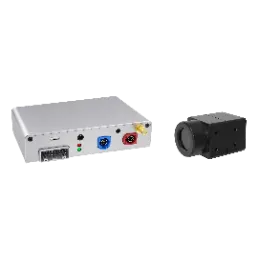
- Choice of lens and animal warnings: JV-ADS-S5.
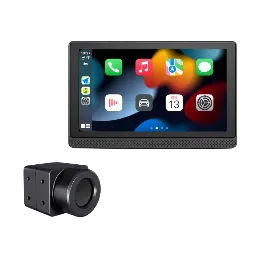
- Simple 7-inch retrofit with three-level alerts: JV-ADS-S7.
- Use the car’s CarPlay screen: A2C / A3C / A6C.
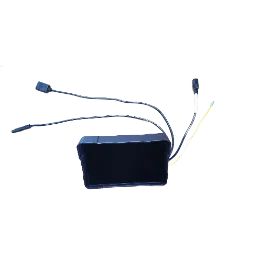
- Fleets and integrators: AHD or HDMI output units.
Tell us the vehicle, typical speeds and display, and our engineers will recommend a configuration through our OEM and ODM service.
FAQ
How far can a car thermal camera detect a pedestrian?
With the 9.1 mm lens, JOVSTAR systems detect a person at 859 m and recognize one at 214 m. AI warnings for people work to about 80 m.
Why is the AI warning distance shorter than detection?
The AI needs more pixels on the target to classify it reliably as a person or a vehicle, so it works at shorter range than simple detection.
Does a 640×512 camera see further than 256×192?
Not with the same lens. It recognizes people at about the same distance but covers a much wider field of view: 48° × 39° instead of 18° × 13° with the 9.1 mm lens.
Can a thermal camera be mounted behind the windshield?
No. Thermal infrared does not pass through windshield glass, so the camera must be mounted outside the vehicle, usually in the front grille.
Need Help Choosing the Right Product?
Tell us your application, target and operating conditions. The JOVSTAR engineering team will recommend a configuration and prepare a quote.
Get a Quote