


Image Intensifier FOM Explained: Resolution × SNR
FOM, or figure of merit, is the single number most often used to compare image intensifier tubes. It is the tube’s resolution in line pairs per millimeter multiplied by its signal-to-noise ratio. A tube with 64 lp/mm and an SNR of 25 has a FOM of 1600. This guide explains what each part means, what FOM does and does not tell you, and how JOVSTAR’s Class C, B and A tubes compare. For the full tube range, see our image intensifier tube selection guide.
The Formula
FOM = resolution (lp/mm) × signal-to-noise ratio (SNR)
| JOVSTAR class | Resolution | SNR | Stated FOM |
|---|---|---|---|
| Class C | 60 lp/mm | 23 | 1400 |
| Class B | 64 lp/mm | 25 | 1600 |
| Class A | 68 lp/mm | 28 | 1800 |
Multiplying each class’s resolution and SNR gives values close to its stated FOM.
Resolution: How Much Detail
Resolution is measured by viewing a test pattern of black and white lines through the tube and finding the finest pattern that can still be separated. It is given in line pairs per millimeter (lp/mm) at the tube’s input. Higher resolution lets the user see finer detail and recognize objects at longer range, but only when there is enough light for the detail to rise above the noise.
Resolution is usually measured at a moderate light level. In bright conditions, auto-gated tubes keep more of it: JOVSTAR Class B and Class A tubes keep 54 lp/mm at 200 lx.
Signal-to-Noise Ratio: How Clean in the Dark
At very low light, only a few photons reach each part of the photocathode, and the image becomes grainy, like moving snow. SNR measures how strong the useful signal is compared with that noise, at a very low standard light level. A higher SNR means a cleaner, calmer image on the darkest nights, which is when night vision matters most.
SNR depends mainly on the photocathode sensitivity (700, 800 and 1000 μA/lm for JOVSTAR Classes C, B and A) and on the noise added by the microchannel plate.
What FOM Tells You and What It Doesn’t
FOM is useful because it combines detail and low-light cleanliness in one number. Two tubes with the same FOM can still look different:
- A tube with high resolution and lower SNR looks sharp under moonlight but noisier on a moonless night.
- A tube with lower resolution and higher SNR looks softer but calmer in deep darkness.
So for users who mostly work in very dark conditions, look at SNR as well as FOM. Other parameters matter too:
- Luminance gain: how bright the image is. 8,000–12,000 cd/m²/lx for Classes C and B, 10,000–20,000 for Class A.
- Maximum output brightness: 4–8 cd/m² (Classes C and B) or 4–10 cd/m² (Class A).
- Power supply: normal on Class C; auto-gating on Classes B and A, which protects the tube and keeps the image usable when lights appear. See our guide to auto-gating.
- Phosphor: JOVSTAR tubes use P43 green phosphor.
How FOM Shows in a Complete Device
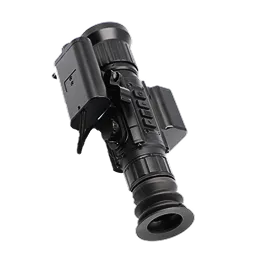
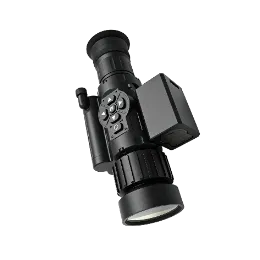
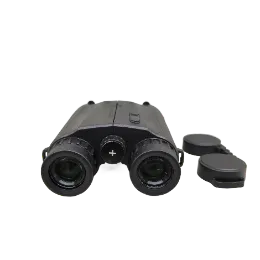
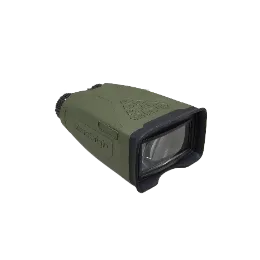
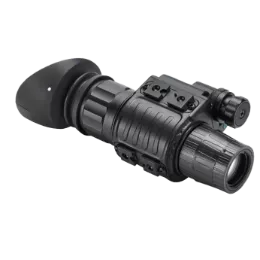
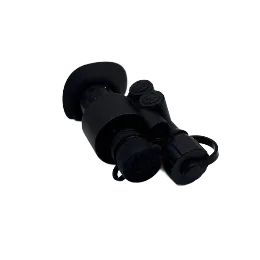
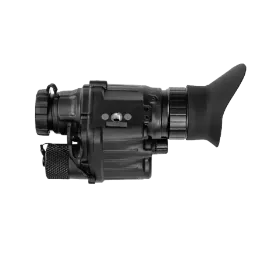
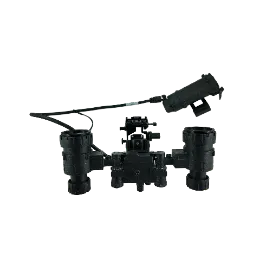
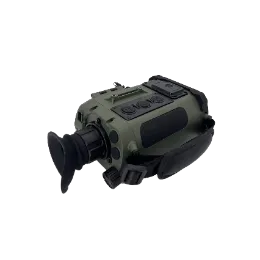
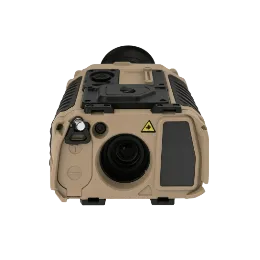
A device’s performance also depends on its optics. The JV-NVM201 monocular and the JV-NVG201 goggle combine Gen2+ tubes with F1.2, 25 mm objectives, and are offered with FOM 1400–2200, 60–72 lp/mm and 23–32 dB S/N. With 1× optics, JOVSTAR goggles such as the JV-NVB201 and JV-NVF201 recognize people at ≥100–120 m on a moonless night.
Choosing a Tube Class by FOM
- Class C (FOM 1400): general observation under some ambient light, lowest power (15 mA) and cost.
- Class B (FOM 1600): auto-gated, for users who move between dark areas and lights, such as patrols near roads and buildings.
- Class A (FOM 1800): the highest SNR (28), gain and sensitivity, for the darkest conditions and long observation.
All five JOVSTAR tube series, the JV-IT64, JV-IT1D, JV-IT20, JV-IT24 and JV-IT60, are available in all three classes. Tell us your device and conditions, and our engineers will recommend a class through our OEM and ODM service.
FAQ
How is FOM calculated?
FOM is the tube’s resolution in line pairs per millimeter multiplied by its signal-to-noise ratio. For example, 64 lp/mm × SNR 25 gives FOM 1600.
Is a higher FOM always better?
Generally yes, but check SNR as well if users work in very dark conditions. Two tubes with the same FOM can trade resolution against noise differently.
What FOM do JOVSTAR tubes offer?
JOVSTAR tubes come in Class C (FOM 1400), Class B (FOM 1600) and Class A (FOM 1800), across the JV-IT64, JV-IT1D, JV-IT20, JV-IT24 and JV-IT60 series.
Need Help Choosing the Right Product?
Tell us your application, target and operating conditions. The JOVSTAR engineering team will recommend a configuration and prepare a quote.
Get a Quote