
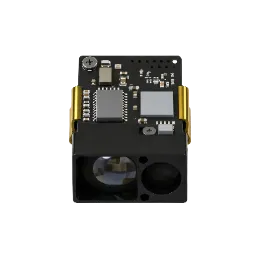
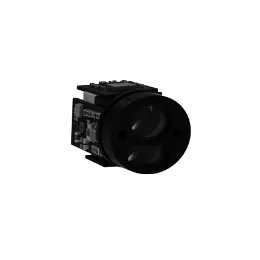
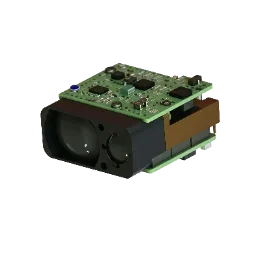
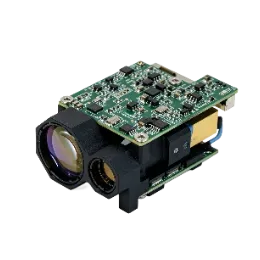


Long-Range Laser Rangefinder Modules: 10 km vs 25 km
Maritime monitoring, border and perimeter security, airport surveillance and airborne systems often need distance readings well beyond 5 km. At those ranges the choice of laser rangefinder module is shaped as much by the platform’s power, weight and optics as by the range figure itself. This guide compares the JOVSTAR 10 km and 25 km class modules and shows how to match them to a mission. For all models, see our long range laser rangefinder selection guide.
What Long-Range Applications Need
- Range on the real target. Vessels, vehicles and people, not just buildings. Small-target figures decide whether the module is good enough.
- A narrow beam. At 10 km, every 0.1 mrad of divergence widens the spot by 1 m. Long-range modules use beams of 0.5 mrad or less.
- Multi-target reporting. Over long paths, the beam may clip waves, masts, foliage or haze before it reaches the target.
- A robust interface. Long cable runs on ships, towers and aircraft favor RS422.
- Wide temperature range. Outdoor and airborne equipment typically needs -40℃ operation.
- Eye safety. Class 1 at 1535 nm allows long range without special laser controls in normal use.
10 km Class vs 25 km Class
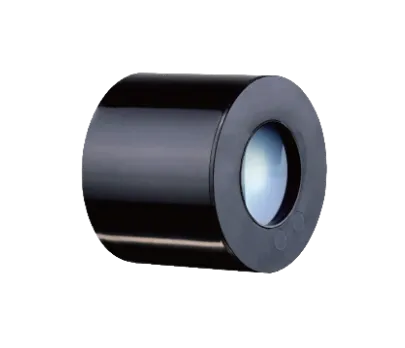
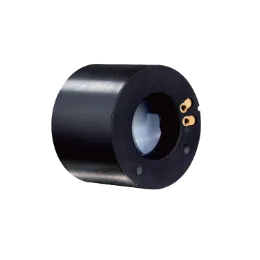
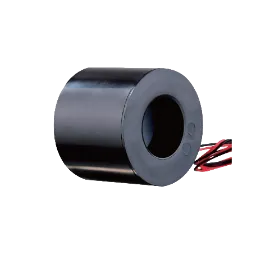
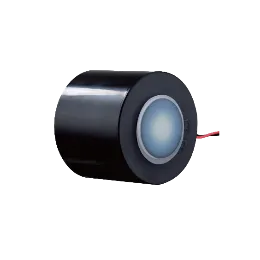
| Parameter | JV-LRF1508AD (10 km class) | JV-LRF1520AD (25 km class) |
|---|---|---|
| Wavelength / eye safety | 1535 nm ±5 nm, Class 1 | 1535 nm, Class 1, erbium-glass laser |
| Building target | ≥10,000 m (visibility ≥20 km) | ≥25,000 m (visibility ≥30 km, 30% reflectivity) |
| 2.3 × 4.6 m target | ≥8,700 m | ≥20,000 m |
| 0.5 × 1.7 m target | ≥5,500 m | ≥13,000 m |
| 0.1 × 0.2 m target | ≥3,000 m | ≥3,000 m |
| Accuracy | ≤±1 m | ≤±3 m |
| Minimum range | ≤20 m | ≤100 m |
| Measurement frequency | Single shot, 1–10 Hz | Single shot, 1–5 Hz |
| Multi-target | Dual target | Dual target |
| Interface | RS422 / TTL | RS422 |
| Supply | DC 4.5–14 V | DC 22–34 V |
| Average / peak power | ≤0.6 W @1 Hz / ≤5 W | ≤3.8 W @1 Hz / ≤53 W |
| Size / weight | ≤61 × 32 × 48 mm, ≤60 g | ≤134 × 99 × 77 mm, ≤790 g |
| Operating temperature | -40℃ ~ +60℃ | -40℃ ~ +60℃ |
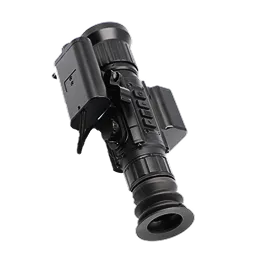
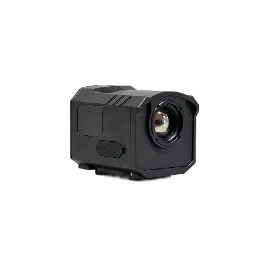
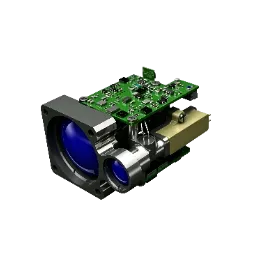
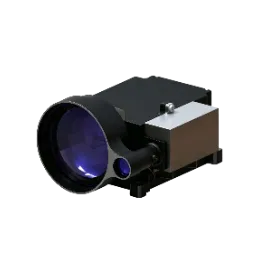
The table shows the trade-off clearly. The JV-LRF1508AD delivers 10 km class range in a 60 g module with a low-voltage supply, so it fits gimbals, handheld equipment and small EO systems. The JV-LRF1520AD more than doubles the range on vessel- and person-sized targets, but needs a 22–34 V supply, a peak power budget of 53 W and space for a 790 g unit. That suits ships, aircraft pods and fixed sites.
Matching the Module to the Platform
Maritime and port monitoring
Vessels are large targets, but sea haze and spray reduce visibility, and waves can return false echoes. Dual-target reporting helps separate the vessel from the water surface in front of it. The JV-LRF1508AD lists maritime ranging among its applications. Shipborne systems that must range at 15–20 km use the JV-LRF1520AD. For harbor-scale distances, the 5 km JV-LRF1505AD is used for port monitoring.
Border and perimeter security
Fixed towers and vehicles watch wide areas, and an operator needs distance as soon as a thermal camera picks up a person or vehicle. The figure that matters is the human-target range: ≥5,500 m for the JV-LRF1508AD and ≥13,000 m for the JV-LRF1520AD. Ranging is usually built into a PTZ or EO turret together with thermal and visible cameras; see our Border and Perimeter Security System Solution.
Airport and mining
The JV-LRF1508AD lists airport and mining ranging among its applications. Both involve open sites several kilometers across, where the module’s ≤±1 m accuracy, its compact size and its low average power make it easy to add to existing surveillance or measurement equipment.
Airborne and firefighting
Aircraft pods and long-range firefighting observation need range to distant ground features and fire fronts, often through smoke or haze. The JV-LRF1520AD lists airborne, shipborne and firefighting ranging among its applications. Its large receiving aperture and narrow beam give the margin these conditions require.
Power, Interface and Mechanical Planning
- Power: design for peak current. The JV-LRF1520AD’s 53 W peak needs a supply rail and wiring rated for it, even though its average draw at 1 Hz is ≤3.8 W.
- Interface: use RS422 for cable runs through masts, turrets and slip rings. The JV-LRF1508AD also offers TTL for compact, single-board designs.
- Alignment: at 10 km, 0.1 mrad of boresight error moves the spot 1 m. Mount the rangefinder and cameras on one rigid optical bench, and align them on a distant target.
- Minimum range: the JV-LRF1520AD starts at ≤100 m. If the same system must range close objects, add a short-range module or choose the JV-LRF1508AD (≤20 m).
Pairing Long-Range Ranging with Imaging
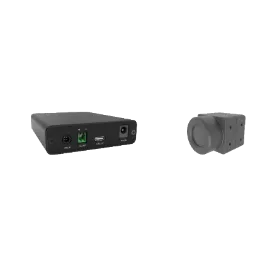
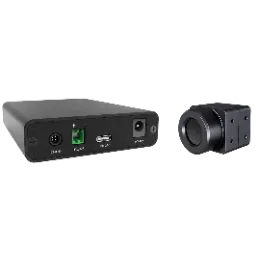
A rangefinder measures one point; the operator still needs to find and identify the target. Long-range modules are therefore almost always paired with a thermal camera for detection at night and through light haze, and a visible zoom camera for identification by day. The distance output can then be combined with pan and tilt angles and the platform’s GNSS position to locate the target on a map.
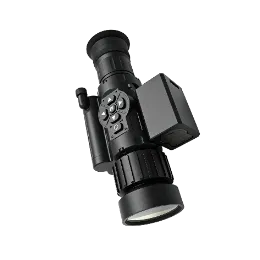
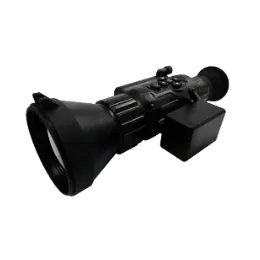
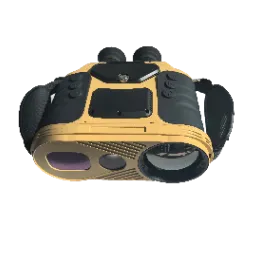
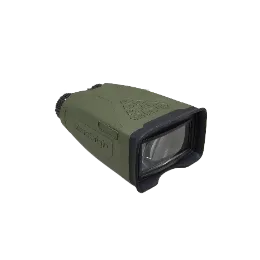
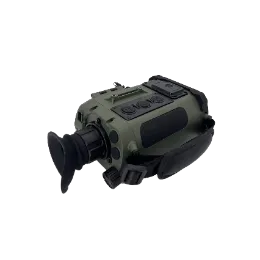
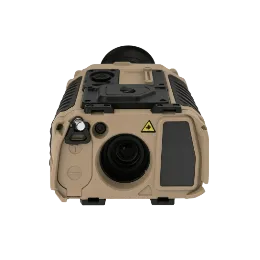
For a complete instrument rather than a module, the handheld JV-LRFM10 ranges large targets at ≥10 km and vehicles at ≥7 km, with built-in self-positioning (≤±3 m) and target positioning (≤20 m).
Planning a long-range system? Tell us the target, the distance and the platform, and the JOVSTAR engineering team will recommend a configuration. Customized interfaces and mounting are available through our OEM and ODM service.
FAQ
What is the longest-range JOVSTAR laser rangefinder module?
The JV-LRF1520AD ranges buildings at ≥25,000 m (visibility ≥30 km, 30% reflectivity), 2.3 × 4.6 m targets at ≥20,000 m and human-sized targets at ≥13,000 m.
Can a 25 km rangefinder measure a person at 25 km?
No. The 25 km figure applies to buildings. The JV-LRF1520AD ranges a 0.5 × 1.7 m human-sized target at ≥13,000 m and a 0.1 × 0.2 m target at ≥3,000 m.
Why do long-range modules use RS422?
Long-range modules are usually installed on ships, towers, turrets and aircraft, where cables are long and electrical noise is high. RS422 uses differential signaling that tolerates both.
Which long-range module suits a gimbal or handheld device?
The JV-LRF1508AD. It ranges buildings at ≥10,000 m and human-sized targets at ≥5,500 m, weighs ≤60 g and runs from DC 4.5–14 V with RS422 or TTL output.
Need Help Choosing the Right Product?
Tell us your application, target and operating conditions. The JOVSTAR engineering team will recommend a configuration and prepare a quote.
Get a Quote