


Thermal Camera Range: Detection vs Recognition Explained
Thermal camera range is always quoted for a task. Detection means seeing that something is there, recognition means telling a person from an animal or a vehicle, and identification means telling one person or vehicle from another. Each task needs more detail, so each range is shorter: a JOVSTAR JV-650M detects a person at 3.0 km but recognizes one at 1.0 km. This guide explains how these ranges are set and how to use them. For the full model line-up, see our thermal imaging camera selection guide.
Detection, Recognition and Identification
The three range figures, often called DRI, describe how much detail the camera puts on the target.
- Detection: a warm object is visible against the background, but you cannot tell what it is.
- Recognition: you can tell the class of object: a person, an animal, a car or a truck.
- Identification: you can tell which one it is, for example a person carrying something, or a specific type of vehicle.
The figures come from the Johnson criteria, which relate each task to the number of detector pixels across the target’s critical dimension. Detection needs roughly 1.5 line pairs (about 3 pixels), recognition about 3 line pairs (about 6 pixels), and identification about 6 line pairs (about 12 pixels). Because recognition needs about twice the detail of detection, recognition range is roughly a third to a half of detection range in practice.
How the Camera Sets the Range
Pixel pitch and focal length
Each detector pixel sees a small angle of the scene, its instantaneous field of view (IFOV). IFOV is the pixel pitch divided by the focal length. A smaller angle means each pixel covers less of the scene, so more pixels land on a distant target.
| Camera | Pixel pitch | Lens | IFOV | One pixel at 1 km |
|---|---|---|---|---|
| JV-TSRII425 | 17 μm | 25 mm | 0.68 mrad | 68 cm |
| JV-TSRII454 | 17 μm | 54 mm | 0.31 mrad | 31 cm |
| JV-650M | 12 μm | 50 mm | 0.24 mrad | 24 cm |
| JV-MFB675 series | 12 μm | 75 mm | 0.16 mrad | 16 cm |
This is why the JV-TSRII4 series gains range as the lens gets longer, with the same 384×288 detector. Human detection rises from 1,670 m with the 25 mm lens to 2,100 m with the 54 mm lens, and vehicle recognition from 630 m to 1,000 m.
Resolution and field of view
With the same pixel pitch and lens, a higher resolution does not add range: each pixel still sees the same angle. It widens the field of view, so you can watch a larger area at the same range. Choose resolution for coverage and lens for distance.
Sensitivity (NETD)
NETD is the smallest temperature difference the camera can show. A sensitive detector keeps a target visible when its contrast with the background is low, for example in rain, fog or at dawn when the ground warms up. JOVSTAR cameras range from <25 mK on the cooled HMF-6210C to 40–50 mK on entry monoculars.
What the Target and the Weather Do
- Target size. Range figures name a target. The JV-TSRII350 uses a 1.8 × 0.92 m person and a 2.3 × 2.3 m vehicle; a crouching person or a small animal will be detected at a shorter range.
- Temperature contrast. A warm body against a cold night background is easy; the same body against sun-warmed rocks is harder.
- Atmosphere. Humidity, rain and fog absorb infrared and reduce range. Thermal imaging sees through darkness and smoke, but not through glass or water.
Reading a Thermal Camera Range Table
| Model | Person: detection / recognition | Vehicle: detection / recognition |
|---|---|---|
| JV-HTM4125 (384×288, 25 mm) | 550 m / 270 m | 750 m / 380 m |
| JV-HTM4135 (384×288, 35 mm) | 1,150 m / 385 m | 1,600 m / 535 m |
| JV-TSRII454 (384×288, 54 mm) | 2,100 m / 680 m | 3,200 m / 1,000 m |
| JV-TSRII350 (384×288, 50 mm) | 1,800 m / 600 m | 4,500 m / 1,500 m |
| JV-650M (640×512, 50 mm) | 3.0 km / 1.0 km | 6.5 km / 2.3 km |
Two things stand out. First, recognition is always much shorter than detection. Second, figures from different manufacturers, or even different product lines, may use different target sizes and probabilities, so compare like with like.
How to Use DRI Figures to Choose a Camera
- Name the task. Do you need to notice movement (detection) or decide what it is (recognition)?
- Set the distance. Use the farthest distance at which you need that task, not the farthest you might ever look.
- Pick the matching figure. Recognition for hunting and wildlife work; detection for perimeter watch, where a second look follows.
- Leave margin. Choose a camera whose figure is clearly above your distance, to allow for humidity, rain and low contrast.
- Check the field of view. A long lens gives range but a narrow view; for searching close terrain, a wider lens may be more useful.
Which JOVSTAR Thermal Camera Fits Your Range
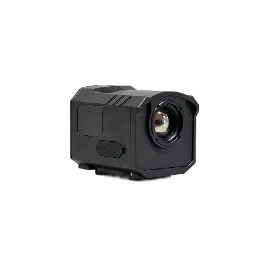
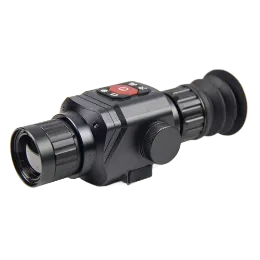
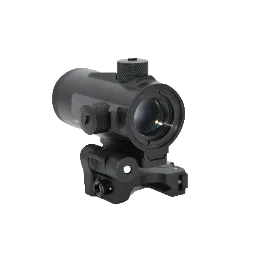
- Close-range search and patrol, up to a few hundred meters: JV-HTM4125 / 4135.
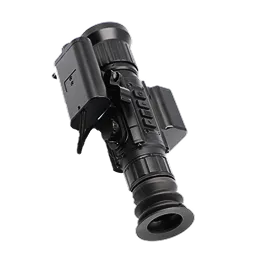
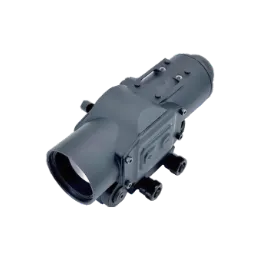
- Recognizing people at 500–700 m: the JV-TSRII4 series or the JV-TSRII350.
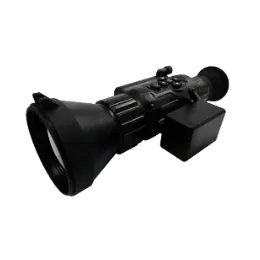
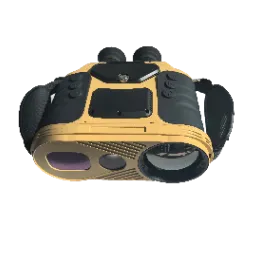
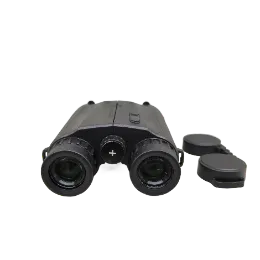
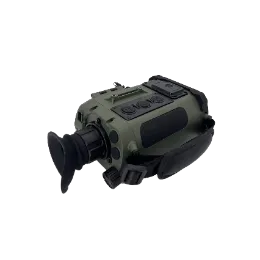
- Recognizing people at about 1 km and vehicles beyond 2 km: the JV-650M binocular.
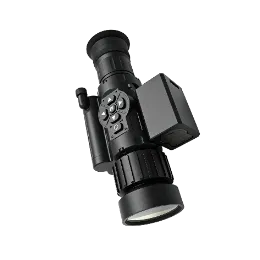
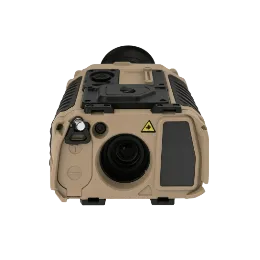
- Long-range observation with distance and position: the JV-MFB675 series with laser ranging to 6, 8 or 12 km.
Tell us the task, the distance and the environment, and our engineers will recommend a configuration. Customized lenses and detectors are available through our OEM and ODM service.
FAQ
What is the difference between detection and recognition range?
Detection range is how far away the camera shows that something warm is there. Recognition range is how far away you can tell whether it is a person, an animal or a vehicle. Recognition needs more pixels on the target, so it is always shorter: the JV-650M detects a person at 3.0 km and recognizes one at 1.0 km.
Does a higher resolution thermal camera see further?
Not with the same lens and pixel size. Resolution mainly widens the field of view. Range depends on focal length and pixel pitch: a longer lens or smaller pixels put more pixels on a distant target.
Why do manufacturers' range figures differ?
Range figures depend on the target size, the probability used and the weather assumed. Always compare figures for the same target, for example a 1.8 × 0.92 m person or a 2.3 × 2.3 m vehicle.
Can a thermal camera see through fog?
Light fog and haze reduce range but thermal imaging usually still sees further than the eye. Dense fog and heavy rain absorb infrared strongly. Thermal cameras cannot see through glass or water.
Need Help Choosing the Right Product?
Tell us your application, target and operating conditions. The JOVSTAR engineering team will recommend a configuration and prepare a quote.
Get a Quote