
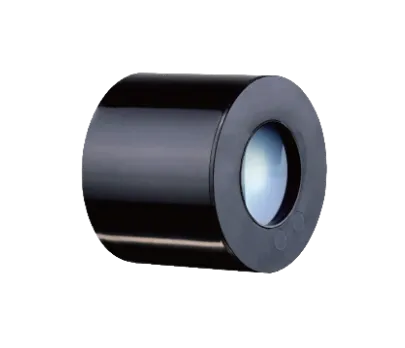
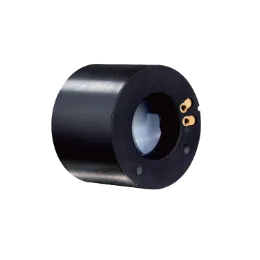
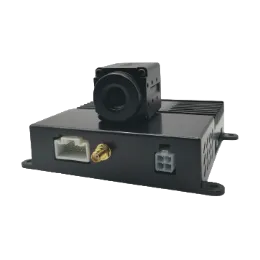
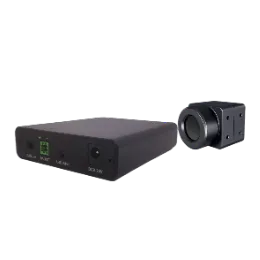


905 nm vs 1535 nm Laser Rangefinder Modules: How to Choose
If your project needs range readings within about 2 km and every gram and milliwatt counts, a 905 nm module is usually the right choice. If you need 4 km or more, or need to range small targets such as people, vehicles or drones at long distance, choose 1535 nm. This guide explains why, using measured figures from JOVSTAR modules. For the full model line-up, see our laser rangefinder module selection guide.
The Short Answer
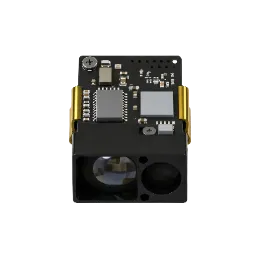
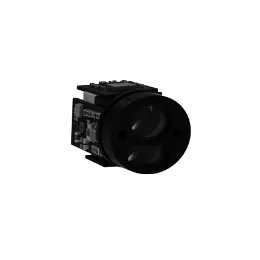
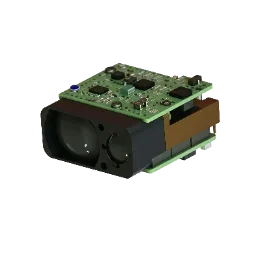
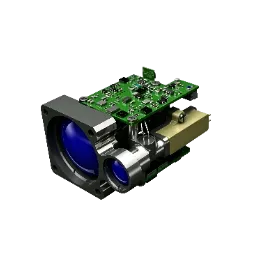
- Choose 905 nm for handheld devices, small drones, golf and power-line ranging, warehouse anti-collision and other short-range measurement where size, weight and power come first. JOVSTAR 905 nm modules weigh 5–6 g and range up to 2 km on buildings.
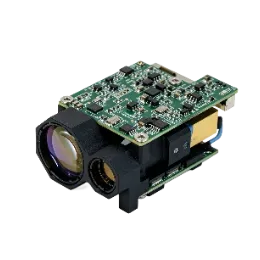
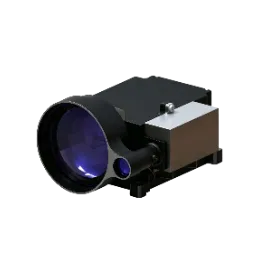
- Choose 1535 nm for long-range observation, UAV mapping, border, port and maritime monitoring, or any task where the real target is small. JOVSTAR 1535 nm modules range from 4 km to 25 km on large targets and 1.5 km to 13 km on a human-sized target.
How Wavelength Affects Range
A pulsed laser rangefinder fires a short pulse and times the echo. How far it can reach depends mostly on how much energy it can put into each pulse, how well the receiver picks the weak echo out of background light, and how much of the beam lands on the target.
Pulse energy is capped by eye safety
Both wavelengths are invisible, and both must stay within an eye-safety limit. At 905 nm the eye focuses the light onto the retina, so the permitted energy per pulse is low. At 1535 nm the cornea and the fluid at the front of the eye absorb the light before it can be focused, so the permitted energy is far higher. A 1535 nm module can therefore send much stronger pulses and still be Class 1, and that extra energy is the main reason it reaches further.
Sunlight and the receiver
Daylight adds background noise that the receiver has to reject. Sunlight is weaker at 1.5 µm than at 905 nm, which helps 1535 nm modules in daytime. The effect shows clearly in the 905 nm JV-LRF902BD: it ranges a building at ≥2,000 m at night but ≥1,200 m by day. The two wavelengths also use different detectors: 905 nm modules typically use silicon avalanche photodiodes, while 1535 nm modules use InGaAs detectors that are sensitive at that wavelength.
Beam divergence
A narrower beam keeps more energy on a distant target. JOVSTAR 905 nm modules use a 3.5–6 mrad beam, which suits compact optics. The 1535 nm modules use 0.45–0.8 mrad. At 2 km, a 6 mrad beam is about 12 m wide, while a 0.6 mrad beam is about 1.2 m wide, small enough that most of it can fall on a person-sized target.
Eye Safety at Each Wavelength
All JOVSTAR 905 nm and 1535 nm modules are specified as Class 1, the class that is safe under reasonably foreseeable use, including viewing with the naked eye. The difference is the headroom: a 905 nm module reaches Class 1 by keeping its pulse energy low, which limits its range, while a 1535 nm module stays Class 1 at energy levels that would not be allowed at 905 nm. If your product will be used near people, for example on a drone over a work site or in a handheld device, both wavelengths can meet the requirement; 1535 nm simply lets you do it at longer range.
Size, Weight and Power
This is where 905 nm wins. Its laser diodes and silicon detectors are small and run from a few volts, so a complete module fits on a fingertip. A 1535 nm module needs a larger receiving aperture to collect weak echoes from far away, and more power while firing.
| Model | Wavelength | Weight | Dimensions | Supply | Average / peak power |
|---|---|---|---|---|---|
| JV-LRF902BD | 905 nm | ≤5 g | ≤22.5 × 15.5 × 9.5 mm | DC 3.3–5 V | ≤0.6 W / ≤1.35 W |
| JV-LRF901FD | 905 nm | ≤6 g | ≤25 × 20 × 10.5 mm | DC 3.3–5 V | ≤0.6 W / ≤1 W |
| JV-LRF1503DD | 1535 nm | 14 g ±1 g | ≤27.7 × 24.6 × 15.4 mm | DC 3–16 V | ≤1.5 W / ≤3 W |
| JV-LRF1503AD | 1535 nm | ≤34 g | ≤48 × 30.5 × 21 mm | DC 5–16 V | ≤1.5 W (10 Hz) / ≤3 W |
The gap is smaller than many engineers expect. The 4 km JV-LRF1503DD weighs about 14 g, so a 1535 nm module is a realistic option even for mid-size drones and handheld devices.
Cost and Availability
905 nm modules are built from high-volume components: pulsed laser diodes and silicon detectors. 1535 nm modules typically use erbium-glass lasers, as in the JV-LRF1505AD and JV-LRF1520AD, and InGaAs detectors, which cost more. As a rule, a 905 nm module is the lower-cost option for the same task, provided its range is enough. If you find yourself pushing a 905 nm module to the edge of its range, the 1535 nm module is usually the cheaper choice overall, because it avoids failed readings in the field.
905 nm vs 1535 nm: Side-by-Side
| Factor | 905 nm (JOVSTAR) | 1535 nm (JOVSTAR) |
|---|---|---|
| Range, large target | 1.2–2 km | 4–25 km |
| Range, 0.5 × 1.7 m target | ≥800 m | 1.5–13 km |
| Eye safety class | Class 1 | Class 1 |
| Beam divergence | 3.5–6 mrad | 0.45–0.8 mrad |
| Accuracy | ±0.3 m to ±1 m | ±1 m to ±3 m |
| Minimum range | 0.1–3 m | 10–100 m |
| Weight | 5–6 g | 14–790 g |
| Multi-target detection | No | Dual or triple target |
| Interface | UART (TTL 3.3 V) | UART (TTL 3.3 V) or RS422 |
Two rows are easy to overlook. 905 nm modules measure much closer, from 0.1 m on the JV-LRF902BD, and are more accurate at short distance (±0.3 m within 50 m). 1535 nm modules add multi-target detection, which reports more than one echo when the beam passes through foliage, rain or a fence.
Which JOVSTAR Module Fits Your Project
- Small drones and compact handheld devices: JV-LRF902BD (≤5 g, 0.1 m minimum range) or JV-LRF901FD (≤6 g, 1,200 m).
- Night vision devices, surveillance PTZs, wildlife and forest-fire monitoring: JV-LRF902CD, with ≥2,000 m on buildings at night.
- Handheld observation and vehicle or fixed-site monitoring to 4 km: JV-LRF1503DD, 14 g with three-target detection.
- Aerial mapping and drone inspection to 5 km: JV-LRF1503AD, ≥2,000 m on a human-sized target.
- Maritime, airport and airborne systems: JV-LRF1508AD (≥10 km) or JV-LRF1520AD (≥25 km).
If your requirement sits between two models, send us the target size, the distance and the platform. Our engineers can recommend a module or configure one for your system through our OEM and ODM service.
FAQ
Is 1535 nm always better than 905 nm?
No. 905 nm modules are smaller, lighter, lower in cost and more accurate at close range, and they can measure from as close as 0.1 m. If your targets are within their rated range, a 905 nm module is often the better engineering choice.
Can a 905 nm laser rangefinder module work in daylight?
Yes, but sunlight reduces its range. The JOVSTAR JV-LRF902BD ranges a building at ≥1,200 m by day and ≥2,000 m at night.
Which wavelength is better for drones?
For small drones and short ranges, a 905 nm module such as the JV-LRF902BD (≤5 g) is usually best. For mapping, inspection or ranging small targets beyond about 1 km, a light 1535 nm module such as the JV-LRF1503DD (14 g) or JV-LRF1503AD (≤34 g) fits better.
Are both wavelengths eye-safe?
All JOVSTAR 905 nm and 1535 nm modules are specified as Class 1. A 1535 nm module stays Class 1 at much higher pulse energy, which is why it can reach further.
Need Help Choosing the Right Product?
Tell us your application, target and operating conditions. The JOVSTAR engineering team will recommend a configuration and prepare a quote.
Get a Quote