


Gen2+ vs Gen3 vs Digital Night Vision: How to Choose
Choose Gen2+ image-intensifier night vision for the best balance of image quality, battery life and cost. Choose Gen3 when users regularly work in the darkest conditions and the budget allows. Choose digital night vision for a lighter, lower-cost device with recording and full color at dusk, provided users accept a display and some help from an infrared illuminator. This guide compares the three with JOVSTAR examples. For complete devices, see our night vision goggles selection guide.
The Three Technologies at a Glance
| Factor | Gen2+ tube | Gen3 tube | Digital (CMOS) |
|---|---|---|---|
| How it works | Multi-alkali photocathode + MCP + phosphor | Gallium arsenide photocathode + MCP + phosphor | Low-light sensor + processor + display |
| Image | Analog, no latency | Analog, no latency | Digital, small display latency |
| Darkest-condition performance | Very good | Best | Needs more light or an IR illuminator |
| Recording | No | No | Photo and video on many models |
| Battery life (JOVSTAR examples) | 60–100 h on one CR123A (JV-NVM201) | Similar to Gen2+ | About 6 h on one 18650 cell |
| Cost | Medium | Highest | Lowest |
Gen2+ Image Intensifier Night Vision
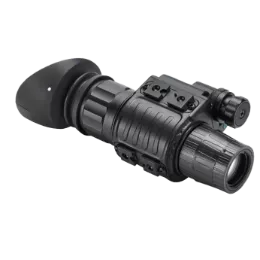
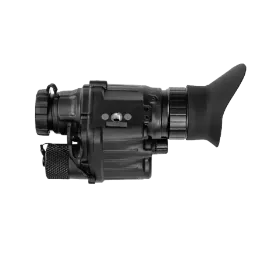
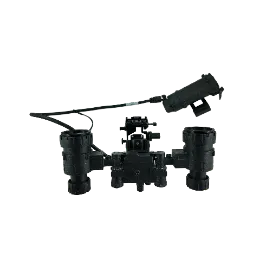
A Gen2+ tube uses a multi-alkali (S25) photocathode with extended red response, a microchannel plate and a phosphor screen. It gives a natural, instant image and runs for a very long time on small batteries. Quality is measured by FOM, the product of resolution and signal-to-noise ratio. JOVSTAR’s JV-NVM201 monocular and JV-NVG201 goggle use Gen2+ tubes with FOM 1400–2200, 60–72 lp/mm resolution and 23–32 dB S/N, and run 60–100 hours on one CR123A.
Gen2+ is the default for most professional buyers: it covers patrol, search and rescue, and observation well, at a price that allows equipping whole teams.
Gen3 Image Intensifier Night Vision
A Gen3 tube replaces the multi-alkali photocathode with gallium arsenide (GaAs), which is more sensitive, especially to the near-infrared light that dominates a moonless night sky. The result is a brighter, cleaner image in the darkest conditions, such as under heavy cloud or tree cover. JOVSTAR offers Gen3 as an option on most image-intensifier devices, including the JV-NVM201, JV-NVG201, JV-NVB201 and JV-NVF201.
Gen3 makes most sense when users work in very low light every night; under moonlight or near towns, a high-FOM Gen2+ tube is often enough.
Digital Night Vision
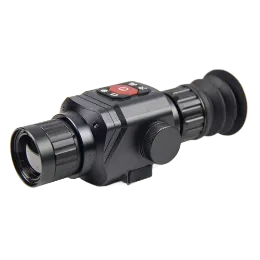
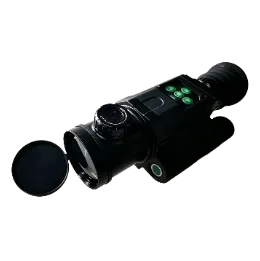
Digital night vision uses a sensitive CMOS sensor, processes the image and shows it on an OLED microdisplay or a screen. That brings features tubes cannot offer:
- Recording: photo and video on models such as the JV-NVD8X-3.5 and JV-NVD401.
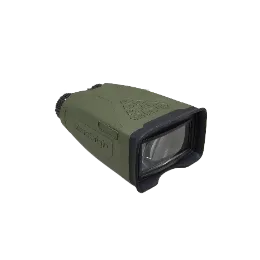
- Full color at dusk: the JV-NVD8X-3.5 shows full-color images down to 0.001 lux on a 3.5-inch screen.
- Image processing: the JV-NVD102 uses AI noise reduction and works down to 0.0001 lux without an illuminator.
- Low weight and cost: the JV-NVD100 weighs 180 g with its battery.
The trade-offs are a small display latency (≤20 ms on the JV-NVD201), shorter battery life than tubes, and the need for an infrared illuminator in complete darkness. JOVSTAR digital devices with built-in 850 nm illuminators include the JV-NVD102 and JV-NVD8X-3.5.
How to Choose
- Will users move with the device on their head? Prefer image-intensifier goggles for zero latency.
- How dark is it? For moonless nights under cover, consider Gen3; otherwise Gen2+ with a good FOM.
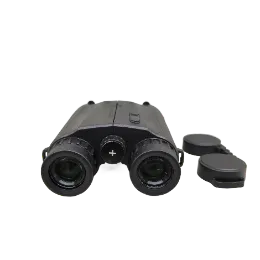
- Do you need recording or several viewers? Choose digital, such as the JV-NVD8X-3.5 large-screen binocular.
- Is weight critical? Digital monoculars from 180 g are the lightest head-mounted option.
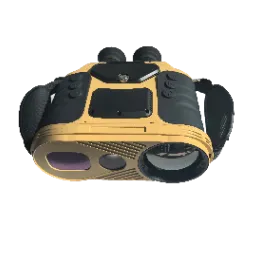
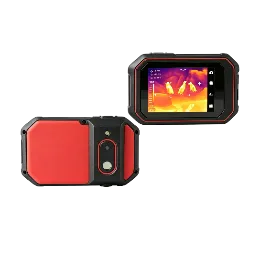
- Do you need to find people by heat? Consider a thermal fusion goggle.
Which JOVSTAR Night Vision Device Fits Your Project
- Gen2+ monocular, long battery life: JV-NVM201 (0.33 kg, 60–100 h).
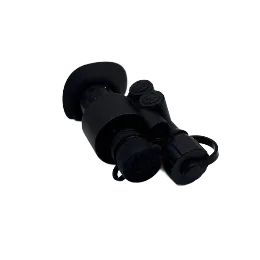
- Gen2+ binocular goggle: JV-NVB201 (≤420 g, Gen3 optional).
- Wide-view Gen2+ goggle: JV-NVF201 four-tube, ≥100° horizontal.
- Light digital head-mounted monocular: JV-NVD100 (180 g).
- Digital with recording and full color: JV-NVD8X-3.5.
JOVSTAR can configure tube generation, FOM range, optics and housings for your market through our OEM and ODM service.
FAQ
Is Gen3 night vision always better than Gen2+?
Gen3 tubes are more sensitive in the darkest conditions, but a high-FOM Gen2+ tube performs very well under moonlight or sky glow and costs less. JOVSTAR offers Gen2+ as standard with Gen3 optional on most devices.
Does digital night vision work in complete darkness?
Digital devices need some light. In complete darkness they rely on an infrared illuminator; the JOVSTAR JV-NVD102 and JV-NVD8X-3.5 have built-in 850 nm illuminators.
Which night vision has the longest battery life?
Image-intensifier devices. The JOVSTAR JV-NVM201 runs 60–100 hours on one CR123A, while digital devices typically run about 6 hours on an 18650 cell.
Can night vision record video?
Image-intensifier devices do not record on their own. Digital devices such as the JV-NVD8X-3.5 and JV-NVD401 record photos and video.
Need Help Choosing the Right Product?
Tell us your application, target and operating conditions. The JOVSTAR engineering team will recommend a configuration and prepare a quote.
Get a Quote